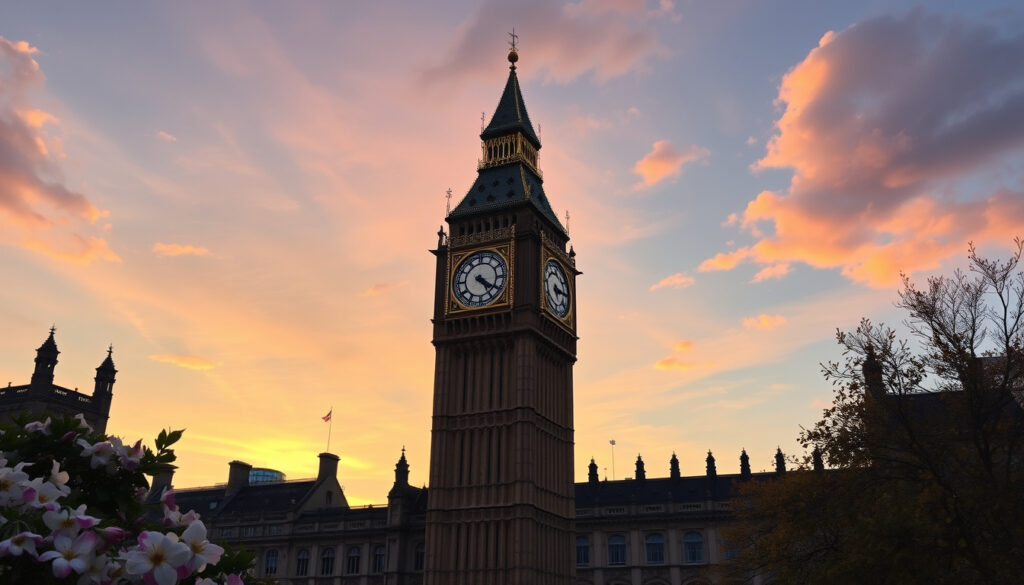
UK Time Change 2025 – Clocks Forward March 30, Back October 26
Twice each year, the United Kingdom adjusts its clocks to account for changes in natural daylight, shifting between Greenwich Mean Time and British Summer Time. In 2025, these transitions fall on specific dates in March and October, following rules established under the Summer Time Act 1972. Understanding when and how these changes occur helps residents plan for shifts in daily routines, travel schedules, and energy consumption.
The practice of changing clocks has deep roots in British history, dating back to World War I, and remains in effect more than a century after its introduction. For most people, the change passes unnoticed thanks to automatic updates on smartphones and computers, but knowing the exact dates remains important for those who rely on non-connected devices, business scheduling, or activities sensitive to daylight hours.
When Do the Clocks Go Forward and Back in the UK in 2025?
In 2025, UK residents will experience two clock changes. The first transition occurs in spring, when clocks move forward to mark the start of British Summer Time. The second comes in autumn, when they revert to standard time. Both dates follow a predictable pattern tied to the last Sunday of specific months, making them easy to anticipate once understood.
2025 Clock Change Overview
Key Facts About the 2025 UK Time Changes
- Clocks spring forward on the last Sunday of March, moving from 1:00am to 2:00am
- Clocks fall back on the last Sunday of October, moving from 2:00am to 1:00am
- British Summer Time runs for roughly seven months, from late March to late October
- The change to BST adds an hour of evening daylight during summer months
- The return to GMT restores an hour of morning daylight in autumn and winter
- Northern Ireland follows the same schedule as the rest of the United Kingdom
- Smartphones and computers typically update automatically, but standalone devices require manual adjustment
Schedule for 2025 and Upcoming Years
| Year | Clocks Go Forward | Clocks Go Back |
|---|---|---|
| 2025 | 30 March at 1:00am | 26 October at 2:00am |
| 2026 | 29 March at 1:00am | 25 October at 2:00am |
| 2027 | 28 March at 1:00am | 31 October at 2:00am |
| 2028 | 26 March at 1:00am | 29 October at 2:00am |
What Time Exactly Do the Clocks Change in the UK?
The mechanics of the clock change involve precise timing that minimizes disruption to daily life. Both transitions occur in the early hours of Sunday morning, when most people are asleep and commercial activity is at its lowest point.
Spring Forward: March 30, 2025
At 1:00am Greenwich Mean Time on Sunday, March 30, clocks will jump forward to 2:00am British Summer Time. This effectively removes one hour from that night, meaning people who stay up until the change will experience only 23 hours that day. The shift provides more evening daylight during the summer months, aligning with longer days in the Northern Hemisphere. Official government guidance confirms this timing as standard practice.
Autumn Back: October 26, 2025
At 2:00am British Summer Time on Sunday, October 26, clocks will retreat to 1:00am Greenwich Mean Time. This grants an additional hour to that night, creating a 25-hour day for those awake at the time. The return to GMT brings brighter mornings but earlier evenings as winter approaches.
Both changes occur on Sunday mornings specifically to reduce the impact on schools and businesses. Saturday night into Sunday morning sees the lowest levels of scheduled activity, making the transition smoother for transportation networks, broadcast schedules, and workplace operations.
What Is British Summer Time and Why Does the UK Observe It?
British Summer Time represents the period when the UK sets its clocks one hour ahead of GMT, maximizing daylight in the evenings during warmer months. The concept emerged from concerns about energy consumption and the efficient use of natural light during longer summer days.
Origins of Daylight Saving in Britain
The idea for adjusting clocks first gained prominence through William Willett, a London builder who published a pamphlet titled The Waste of Daylight in 1907. Willett proposed shifting clocks by 20 minutes each Sunday in April and reversing the change in September, arguing that Britons wasted valuable summer sunlight by sleeping through early morning hours. Despite widespread publicity, Willett died in 1915 before seeing his proposal enacted.
The practice became law during World War I as a response to coal shortages and the need to maximize productivity. Germany had already implemented similar measures, and Britain followed suit through the Summer Time Act 1916. The move aimed to reduce artificial lighting demands and conserve fuel for the war effort.
Modern Legal Framework
The Summer Time Act 1972 consolidated previous legislation and established the current system of predictable, annual clock changes. Under this law, clocks advance by one hour on the last Sunday in March and revert on the last Sunday in October. This framework provides certainty for planning while maintaining the seasonal adjustments that have been part of British life for over a century.
2025 marks the 109th instance of the autumn clock change since the practice began. Discussions continue about whether the current system remains optimal, particularly as energy needs and European time zone alignments have evolved since the original legislation.
What Happens If You Miss the UK Time Change?
Forgetting the clock change typically creates minor inconveniences rather than serious problems, but the effects depend on what type of device or schedule relies on accurate time.
Digital Devices
Modern smartphones, tablets, and computers connected to the internet usually update automatically through network time protocols. Users of these devices rarely need to take any action, as systems check and adjust time settings without manual intervention.
Standalone Devices
Analog clocks, car clocks, and non-connected digital devices will display incorrect times until manually adjusted. This can lead to missed appointments, late arrivals at work, or confusion about opening hours for businesses that have not updated their signage.
Before going to bed on the Saturday night before each clock change, update any standalone clocks and verify that automatic devices have received the correct time update. Adding the transition dates to a digital calendar with reminders ensures no changes are overlooked in future years.
Historical Timeline of UK Clock Changes
- 1907 — William Willett publishes The Waste of Daylight, proposing seasonal clock shifts
- 1916 — Summer Time Act enacted during World War I coal shortages
- 1972 — Summer Time Act formalizes permanent annual changes on fixed Sundays
- 2002 — European Union harmonization aligns most member states to similar schedules
- 2025 — Current system continues with spring forward March 30, fall back October 26
Confirmed 2025 Dates: What Is Certain and What Remains Unclear
| Established Information | Information Requiring Verification |
|---|---|
| Clocks spring forward March 30, 2025 at 1:00am GMT | No pending legislative changes to the system for 2025 |
| Clocks fall back October 26, 2025 at 2:00am BST | Ongoing academic debate about health impacts continues |
| Northern Ireland follows the same schedule as Great Britain | Long-term EU alignment discussions remain unresolved |
| The last Sunday rule determines all future dates | Potential future reforms would require new legislation |
UK Time Changes Explained: Purpose and Effects
The rationale behind seasonal clock changes centers on maximizing the use of natural daylight during hours when most people are awake and active. By shifting clocks forward in spring, the UK gains an additional hour of evening light during summer months, potentially reducing electricity consumption for lighting.
The autumn transition provides compensatory morning brightness as days shorten heading into winter. For those who commute or exercise early, the return to GMT offers more natural light during morning routines. However, the changes also bring darker evenings, which researchers have linked to increased safety concerns including higher accident rates and reduced visibility for pedestrians and cyclists.
The effects are not uniform across the country. Northern regions, including Scotland, experience more pronounced seasonal variations in daylight, meaning the clock changes interact differently with local conditions than in southern England.
Studies indicate that clock changes can disrupt sleep patterns and circadian rhythms, particularly for the spring forward transition which shortens the night. Individuals sensitive to schedule changes may benefit from gradually adjusting bedtimes in the days surrounding each transition.
Official Sources and Legal References
The Summer Time Act 1972 provides the legal framework for the bi-annual adjustment of clocks in the United Kingdom, establishing the last Sunday of March as the spring forward date and the last Sunday of October as the autumn return date.
Clocks change at 1am on the last Sunday in March and at 2am on the last Sunday in October, with the spring change providing more evening daylight and the autumn change returning the UK to Greenwich Mean Time.
Prepare for the 2025 UK Time Change
Planning ahead for the twice-yearly clock transition helps avoid confusion and ensures schedules remain accurate. Checking devices, updating calendars, and reviewing any time-sensitive commitments before each change date prevents the disruptions that come from incorrect timekeeping.
For residents interested in related financial topics, understanding changes in government support systems proves valuable. Those managing household budgets may find information about How Much is Universal Credit – Rates and Allowances 2025 helpful when planning around seasonal schedule shifts. Similarly, those with international commitments might explore how global events align with UK time adjustments through resources like Paris Fashion Week 2025 – Dates, Schedule and Complete Guide to understand how major events coordinate across time zones.
Does Northern Ireland follow the same time change schedule as the rest of the UK?
Yes, Northern Ireland follows the exact same schedule as Great Britain. Clocks in Northern Ireland change at the same times on the same dates, transitioning to British Summer Time on March 30 and returning to GMT on October 26, 2025.
Will the UK ever stop changing clocks permanently?
No permanent changes are scheduled for 2025. The current system under the Summer Time Act 1972 remains in effect. While debates continue about whether the UK should adopt permanent GMT or permanent BST, any such change would require new legislation and parliamentary approval.
What should I do with my alarm clock during the time change?
For spring forward: Set your alarm for the new time one hour earlier than usual if you need to maintain your regular wake-up schedule. For autumn back: No adjustment needed unless you want to wake at the same GMT time rather than BST time.
How does the time change affect flights and travel?
Public transportation schedules typically adjust automatically for clock changes. Flight times are usually listed in local time at the departure and arrival airports, so passengers should verify both when booking trips across the transition dates.
Do all UK territories follow BST?
The Channel Islands and Isle of Man follow the same clock changes as the UK mainland. Overseas territories have their own arrangements based on location and historical ties.
Why does the UK change time instead of staying on GMT year-round?
The semi-normalized system balances evening daylight during summer months with morning light during winter. Permanent GMT would mean darker summer evenings, while permanent BST would create darker winter mornings. The current approach attempts to optimize both.
More related posts
 HMRC Self Assessment Login – Government Gateway Guide 2025
 Noddy Holder – Biography, Health Update 2025 and Family Life
 How Many Steps Should I Walk a Day – Optimal Targets by Age
 Natalie Viscuso (2021–Present) – Age, Baby, Career Facts
 How Long Do Hamsters Live – Lifespans by Species and Care Factors
 Inheritance Tax When Second Parent Dies – Up to £1m Tax-Free
 Pumpkin Picking Near Me – Virginia Farms and 2025 Dates
 Saffron Barker – Age, Net Worth and Strictly Come Dancing