What Are Sea Monkeys – Facts, History and Biology
Sea-Monkeys are hybrid brine shrimp marketed as novelty pets since the 1960s, famous for hatching “instantly” from dormant eggs. Behind the colorful advertising claims lies real crustacean biology and a fascinating backstory involving a controversial inventor, marine science experimentation, and a marketing phenomenon that captivated millions of children.
The tiny creatures, which appear to come alive when water is added to their packet, are genuine living organisms—not magic or fiction. Their survival depends on a remarkable biological process called cryptobiosis, which allows their eggs to remain dormant for years before reviving in saline water. The brand has persisted for decades, surviving legal battles and ownership changes while continuing to sell kits to new generations.
This article examines what Sea-Monkeys actually are, how they work, their history, and whether they remain available today. The goal is to separate marketing from reality and provide factual information grounded in scientific and historical sources.
What Are Sea Monkeys?
Sea-Monkeys are a branded hybrid variety of brine shrimp scientifically known as Artemia NYOS. Developed by inventor Harold von Braunhut in the late 1950s from wild Artemia salina, these creatures were marketed as “instant life” pets that hatch from dormant eggs in kit form. The hybrid was created through a process von Braunhut called “superhomeogenation,” in collaboration with marine biologist Anthony D’Agostino at the New York Ocean Science Laboratory.
Key insights about Sea-Monkeys include the following observations:
- They are not monkeys at all, but Artemia nyos shrimp—a genetically modified relative of wild brine shrimp
- The product was invented by Harold von Braunhut, who partnered with marine biologist Anthony D’Agostino
- More than 2 billion kits have been sold historically since the 1960s
- They survive harsh conditions through cryptobiosis, a suspended animation state
- Kits remain available for purchase online today
- Their eggs can remain viable for years in dry, high-salt environments
- Sea-Monkeys are crustaceans, related to lobsters, crabs, and krill
| Fact | Details |
|---|---|
| Scientific Name | Artemia NYOS (hybrid) |
| Hatch Time | 24-36 hours after hydration |
| Peak Size | Approximately 1/2 inch (1.27 cm) |
| Environment | Packet water with purified salts and nutrients |
| Reproduction | Parthenogenetic (females clone offspring) |
| Diet | Filter-feeding on algae and kit-provided food |
| Swimming Style | Upside-down, using leg-based gills for respiration |
| Evolutionary Age | Approximately 200 million years (largely unchanged since Triassic) |
Sea-Monkeys belong to an ancient lineage with roots tracing back roughly 200 million years. Some researchers note possible references in 10th-century Persian texts describing Lake Urmia shrimp as “aquatic dog,” suggesting human awareness of these creatures long before their commercial debut.
The History of Sea Monkeys
The Inventor and Creation
Harold von Braunhut first encountered brine shrimp in 1957 at a pet store, where they were sold as fish food. Recognizing their potential, he partnered with marine biologist Anthony D’Agostino at the New York Ocean Science Laboratory to develop a hardier hybrid strain. Their collaboration produced Artemia NYOS, the specific variety that would become Sea-Monkeys.
The product launched under the name “Instant Life” in 1960 before being rebranded Sea-Monkeys in 1962. Von Braunhut earned millions from the venture despite what sources describe as steady rather than explosive initial sales. According to reports, von Braunhut held controversial neo-Nazi views despite being Jewish, a fact that later generated public debate and scrutiny.
Why the Name “Sea-Monkeys”?
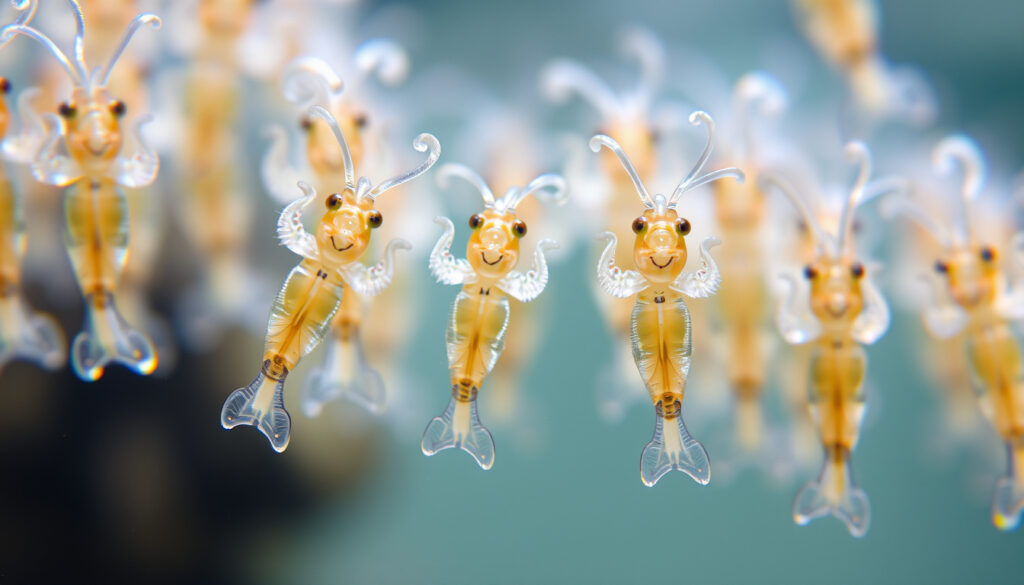
The name derives from the shrimp’s distinctive long, curved tails, which von Braunhut believed resembled monkey tails. The playful naming choice was designed to evoke humanoid imagery, and early advertisements depicted the creatures as tiny, antennaed “mermaids” or “humanoids.” This marketing approach set expectations that the actual appearance—tiny, semi-transparent shrimp swimming upside-down—failed to meet for many buyers.
Many buyers expressed disappointment upon seeing the actual creatures, which bore little resemblance to the cartoonish illustrations in advertisements. This gap between marketing imagery and real appearance remains one of the most commonly cited criticisms of the Sea-Monkeys product line.
How Do Sea Monkeys Work?
The Biology and Cryptobiosis
Sea-Monkeys are crustaceans belonging to the genus Artemia, placing them taxonomically alongside lobsters, crabs, and krill. They thrive in hypersaline environments such as salt lakes, filter-feeding on algae while swimming upside-down and respiring through specialized gills located at the base of their limbs.
The key to their remarkable survival lies in cryptobiosis. When eggs encounter dry, high-salt conditions, they enter a state of diapause—essentially suspended animation. In this dormant phase, desiccated cysts can survive for years, or even withstand the extreme environment of outer space. Upon rehydration in saline water, the eggs activate and hatch, giving the appearance of “instant life.”
The Lifecycle
The Sea-Monkeys lifecycle progresses through distinct stages from dormant egg to mature adult:
| Stage | Duration | Key Features |
|---|---|---|
| Egg (cryptobiosis) | Years viable | Dormant, desiccated cysts |
| Nauplius (hatchling) | Days | Swimming larvae, initial feeding |
| Juvenile | Weeks | Growing, developing features |
| Adult | Weeks to months | Filter-feeding, parthenogenetic reproduction |
Sea-Monkeys reproduce through parthenogenesis—females produce offspring that are genetic clones without requiring fertilization from males. This reproductive strategy allows colonies to grow rapidly from a single female.
Raising and Care
Standard Sea-Monkeys kits include water purification packets and growth food sachets. The process involves converting ordinary tap water to brine through the included chemical packets, then adding the hatching powder containing eggs. Optimal conditions require water temperature around 75°F (24°C), gentle aeration, daily feeding with kit-provided algae or food, and protection from chlorine.
With proper care, Sea-Monkeys typically live for two to six weeks in captivity, though some may survive longer under ideal conditions. In the wild, these crustaceans can live considerably longer.
Do Sea Monkeys Still Exist Today?
Current Availability
Sea-Monkeys kits remain available for purchase online. Yolanda von Braunhut, Harold’s widow, continues selling products through the official Sea-Monkeys website. Modern versions may use either original NYOS stock or Chinese-sourced Artemia, and competitors continue to mimic the original concept. Eggs are also sold widely for fish food and aquarium use.
Ethical Considerations
No major animal cruelty controversies have been documented regarding Sea-Monkeys. Because cryptobiosis allows eggs to be shipped in a dormant state, the creatures experience no harm during transport. The primary ethical concerns center on the short lifespan of these novelty pets, which can lead to disappointment—particularly when buyers’ expectations, shaped by colorful advertising, differ significantly from the reality of tiny, semi-transparent swimming crustaceans.
Von Braunhut’s personal political views generated public controversy, though this related to his character rather than animal welfare practices.
Beyond novelty pets, Artemia eggs represent a significant industry, with approximately 3,500 to 4,000 tonnes produced annually for aquaculture. These eggs serve as a crucial food source for fish and crustacean larvae in commercial fisheries worldwide. The FAO has documented the importance of Artemia cysts in marine hatchery operations across multiple continents.
Timeline: The Evolution of Sea Monkeys
The following timeline outlines key milestones in the development and history of Sea-Monkeys:
- 1957: Harold von Braunhut discovers brine shrimp at a pet store, where they were sold as fish food, and begins collaboration with marine biologist Anthony D’Agostino at the New York Ocean Science Laboratory
- 1960: The product launches under the name “Instant Life” in comic book advertisements
- 1962: The product is rebranded as “Sea-Monkeys” due to the creatures’ monkey-like tail appendages
- 1960s-1980s: Peak sales period with kits selling billions of units through colorful magazine and comic book advertisements
- 2003: Harold von Braunhut passes away; his widow Yolanda inherits the business
- 2013: Yolanda von Braunhut files a lawsuit against Big Time Products over royalties and allegations that the company sourced shrimp from China rather than using authentic NYOS stock
- 2017: Lawsuit settles, with Yolanda retaining rights to continue Sea-Monkeys sales
- Present: Kits remain available through official and third-party sellers; scientific studies continue confirming Artemia viability
Established Facts vs. Uncertain Information
When examining Sea-Monkeys, it helps to distinguish between well-documented facts and claims that lack verification. The scientific literature on Artemia biology provides reliable information on cryptobiosis mechanisms, while research published in Naturwissenschaften has examined the extreme survival capabilities of brine shrimp cysts.
| Established Information | Uncertain or Unverified Claims |
|---|---|
| Sea-Monkeys are real crustaceans (Artemia NYOS hybrid) | Precise genetic modifications used in breeding remain proprietary |
| They function through cryptobiosis, a genuine scientific process | Exact success rates for hatching under various conditions |
| Harold von Braunhut was the inventor; Anthony D’Agostino was the marine biologist collaborator | Full details of the “superhomeogenation” process |
| The product launched as “Instant Life” in 1960, renamed Sea-Monkeys in 1962 | Total number of kits sold (estimates vary widely) |
| Eggs can remain viable for years in cryptobiosis | Long-term viability under non-optimal storage conditions |
| Von Braunhut held controversial political views documented in reports | Specific motivations behind marketing decisions |
Cultural Context and Significance
Sea-Monkeys represent a unique intersection of science, marketing, and popular culture. The product emerged during an era when magazine and comic book advertising was evolving, and the colorful, exaggerated claims seemed almost too good to be true—which in many ways they were. The gap between the cartoonish illustrations and the actual creatures became part of the product’s story.
From a scientific perspective, Artemia species have proven valuable beyond novelty toys. Their eggs serve as a primary food source in aquaculture, and their cryptobiosis capabilities have made them subjects of research in fields studying extreme survival mechanisms. The discovery that their eggs can survive the harsh conditions of space has added another dimension to their scientific significance.
The product also raises questions about marketing ethics and the relationship between expectation and reality in consumer products. Understanding What Is Primary Research can help consumers evaluate claims made in advertising and separate documented facts from promotional language.
Sources and Expert Perspectives
Several sources inform the factual basis of this article. The Nature journal archives document early research on Artemia biology, while the Encyclopedia of ScienceDirect provides comprehensive overviews of brine shrimp cultivation and applications.
“Instant life in a packet” — the original Sea-Monkeys marketing slogan, reflecting the cryptobiosis phenomenon that allows dormant eggs to hatch when rehydrated
“Sea-Monkeys are real, living animals that ‘instantly revive’ when placed in saline water” — scientific characterization noting the genuine biological basis of the product
Key expert sources include marine biologist Anthony D’Agostino, who collaborated with von Braunhut at the New York Ocean Science Laboratory to develop the NYOS hybrid, and research published in scientific databases documenting the biology and lifecycle of Artemia species.
Summary
Sea-Monkeys are hybrid brine shrimp (Artemia NYOS) developed in the late 1950s by Harold von Braunhut with marine biologist Anthony D’Agostino. They are genuine living creatures that survive harsh conditions through cryptobiosis, a biological state allowing dormant eggs to revive when rehydrated. Despite marketing that depicted them as playful, humanoid creatures, the reality consists of tiny, semi-transparent crustaceans swimming upside-down in saline water. Kits remain available today through official and third-party sellers, with ethical concerns centered primarily on expectation management rather than animal welfare issues. For those interested in Can Dogs Eat Peanuts and other pet-related topics, Sea-Monkeys offer a low-maintenance introduction to keeping aquatic life.
Frequently Asked Questions
Are Sea Monkeys just brine shrimp?
Yes, Sea-Monkeys are a hybrid variety of brine shrimp scientifically known as Artemia NYOS. They were developed from wild Artemia salina through selective breeding for enhanced durability and hatch rates.
Why did some Sea Monkeys fail to thrive after hatching?
Common causes include incorrect water temperature (optimal is around 75°F or 24°C), improper salinity levels, chlorine exposure from untreated tap water, overfeeding, or insufficient aeration. The included instructions specify proper procedures that must be followed carefully.
Can Sea Monkeys reproduce?
Yes, Sea-Monkeys reproduce through parthenogenesis. Females produce offspring that are genetic clones without requiring male fertilization. A single female can establish an entire colony, which can grow rapidly under suitable conditions.
Do Sea Monkeys live as long as advertised?
No. While advertising suggested long-lasting pets, Sea-Monkeys typically live for two to six weeks in captivity, and only a few months at most under ideal laboratory conditions. This short lifespan is a common source of disappointment for buyers.
Where can I buy Sea Monkeys today?
Kits are available through the official Sea-Monkeys website operated by Yolanda von Braunhut, as well as third-party online marketplaces. Eggs are also sold widely for fish food and aquarium use.
Are Sea Monkeys shipped humanely?
Because eggs are shipped in a dormant cryptobiotic state, no living creatures are harmed during transport. The eggs only develop into active shrimp when placed in water by the buyer, making the shipping process itself generally considered humane.
What is cryptobiosis?
Cryptobiosis is a state of suspended animation in which metabolic processes nearly cease. For Artemia eggs, this occurs when they are dried and exposed to high-salt environments. In this dormant state, eggs can survive for years, extreme temperatures, and even the vacuum of space, reviving when rehydrated.
More related posts
 Auto Electrician Near Me – Reliable Local Experts and Repairs
 LJ Dubai Bling Husband – Her Marriage to Billionaire Walid Juffali
 Odessa Zion – Biography, Movies and Personal Life Guide
 Latest YouGov Opinion Poll Today – Reform UK Leads at 24%
 Before the Coffee Gets Cold – Book Summary Series Guide
 Is Autism a Disability – Legal Medical and Social Insights
 Can Dogs Eat Peanuts – Safety Risks and Benefits
 Mr and Mrs Smith Hotels – Guide to Curated Boutique Stays