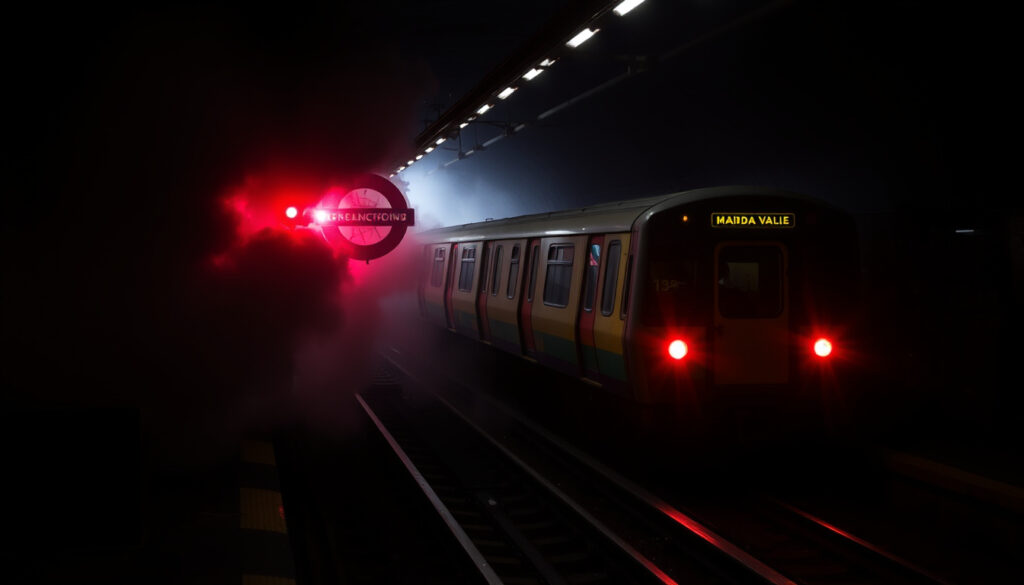
Power Failure London Underground – Maida Vale Fire Disrupts Services
A significant power failure disrupted London Underground services on May 12, 2025, after a fire at a National Grid electricity substation in Maida Vale caused widespread outages across multiple tube lines. The incident, which occurred around 2:30 PM, led to complete suspensions on several lines and forced the evacuation of passengers from key stations including Embankment.
Transport for London responded by accepting underground tickets on London bus services via any reasonable route, providing stranded commuters with alternative options during the afternoon peak period. The disruption highlighted the capital’s vulnerability to infrastructure failures at critical electricity substations.
The Maida Vale substation fire destroyed approximately three meters of high-voltage cable, triggering cascading failures across the transport network. This article provides a comprehensive overview of the incident, its impact on services, and the response from transport authorities.
What caused the power failure on London Underground?
The power failure originated from an accidental fire at the National Grid electricity substation located in Maida Vale, West London. According to available reports, approximately three meters of high-voltage cable were destroyed during the incident, causing a complete loss of power to the affected railway systems.
Infrastructure vulnerability exposed
The Maida Vale substation serves as a critical node in London’s electrical infrastructure, feeding power to multiple Transport for London operations. The destruction of the high-voltage cable created an immediate and total power loss rather than a gradual degradation of services.
The National Grid substation in Maida Vale handles high-voltage electricity distribution across northwest London. Fires or faults at such facilities can affect not only underground services but also broader regional power supplies to homes and businesses in the surrounding area.
While the fire was confirmed as accidental, detailed engineering reports on the exact cause and potential preventive measures had not been publicly released at the time of reporting.
For current service status and real-time updates on London Underground operations, passengers should consult the official TfL website or the TfL Go mobile application.
Which Tube lines are affected and what is the current status?
The power failure caused severe disruption across six distinct lines and overground services, with some lines experiencing complete suspension while others faced significant delays on specific sections.
Completely suspended services
Three services experienced full suspension during the incident. The Bakerloo line was entirely suspended with no trains operating in either direction. The Suffragette and Weaver Overground lines also faced complete suspension, leaving passengers on those routes with no underground alternative.
The Waterloo and City Line, which operates a limited route between Waterloo and Bank, was fully suspended during the outage period.
Partial service disruption
Several major lines continued operating but with substantial delays affecting specific sections. The Elizabeth line experienced severe delays between Paddington and Heathrow Airport/Reading, as well as between Whitechapel and Shenfield. Passengers travelling on those corridors faced extended journey times.
The Jubilee line suffered no service between London Bridge and Finchley Road, effectively splitting the line and limiting connectivity through central London. The Northern line experienced severe delays between Morden and Stockwell and between Euston and Kennington via Charing Cross.
Passengers aboard Elizabeth line trains and those at Embankment station were evacuated as a precautionary measure during the power outage. Transport staff and emergency services assisted with the orderly evacuation of affected stations.
How long will disruptions from the power failure last?
The incident occurred at approximately 2:30 PM on May 12, 2025. While power infrastructure teams worked to restore services, the extent of cable damage meant that full restoration took several hours to achieve. Passengers were advised to expect significant disruption throughout the afternoon and into the evening commute.
Factors affecting restoration time
High-voltage cable repairs require specialized engineering teams and equipment. The destruction of three meters of cable necessitated not only replacement but also testing and safety verification before power could be restored to affected systems.
Transport for London implemented contingency protocols, including accepting underground tickets on London bus services via any reasonable route. This measure remained in effect throughout the disruption period to minimize passenger inconvenience.
What are the best alternative transport options?
During the power failure, Transport for London authorized an emergency measure allowing London Underground tickets to be accepted on London bus services via any reasonable route. This meant passengers could use their tube tickets on bus replacements without additional charge.
Recommended alternatives
Passengers affected by the disruption were advised to consider the following options: traveling via bus routes that parallel affected tube lines; using overground rail services where available; working from home if possible; delaying non-essential journeys; and checking real-time travel apps for the latest information.
For those requiring travel across affected corridors, the bus network provided the most reliable alternative despite longer journey times. Additional bus services may have been deployed on key routes to accommodate increased passenger demand.
Passengers should monitor official TfL channels for updates on service restoration. The Transport for London website provides real-time status updates, while the TfL Go app offers personalized journey planning during disruptions.
Timeline of the power failure incident
The following chronological sequence outlines the major events from the initial power failure through the response and recovery efforts:
- Approximately 2:30 PM: Power failure occurs at Maida Vale National Grid substation following an accidental fire
- 2:30-2:45 PM: Multiple Tube lines begin reporting signal failures and service disruptions
- 2:45-3:00 PM: Bakerloo, Suffragette, and Weaver Overground services suspended entirely
- 3:00-3:30 PM: Evacuation of passengers begins at Embankment station and Elizabeth line trains
- 3:30 PM onwards: Emergency ticket acceptance on London buses announced by TfL
- Throughout afternoon: Engineering teams assess cable damage at Maida Vale substation
- Evening: Gradual restoration of services as power is rerouted and tested
What is confirmed versus unconfirmed about this incident?
| Established information | Information requiring verification |
|---|---|
| Accidental fire at Maida Vale substation on May 12, 2025 | Full technical cause of the fire |
| Three meters of high-voltage cable destroyed | Exact repair costs |
| Power outage occurred around 2:30 PM | Specific passenger numbers affected |
| Bakerloo, Suffragette, Weaver Overground, Waterloo and City fully suspended | Detailed financial impact estimates |
| Elizabeth, Jubilee, Northern lines with severe delays | Formal investigation conclusions |
| Passengers evacuated from Embankment and Elizabeth line | Infrastructure investment announcements |
Historical context of London Underground power infrastructure
London Underground operates one of the oldest metro systems in the world, with portions of infrastructure dating back to the Victorian era. The power distribution network, while regularly maintained, remains susceptible to failures at key supply points that can cascade across multiple lines simultaneously.
Power failures at substations represent a relatively rare but high-impact category of disruption. Unlike signal failures or track issues that typically affect single lines, substation problems can disable entire sections of the network simultaneously.
The Maida Vale incident highlighted the concentration of critical infrastructure at specific geographic points. Redundancy measures exist in the system, but certain failure modes can overwhelm backup capabilities, resulting in the widespread disruptions observed during this event.
Official response and source information
Transport for London issued emergency protocols in response to the power failure, including the acceptance of underground tickets on bus services. The organization’s official channels provided regular updates throughout the incident.
Emergency ticket acceptance on London buses has been implemented following the power failure at Maida Vale. Passengers are advised to check TfL channels for the latest service updates.
— Transport for London official communications, May 12, 2025
For authoritative information on current service status, passengers were directed to the official TfL status updates page. Additional context and regional coverage was available through metropolitan news outlets including the Evening Standard transport section.
Summary and key takeaways
The May 12, 2025 power failure at London Underground resulted from an accidental fire at the National Grid substation in Maida Vale, destroying three meters of high-voltage cable. The incident caused complete suspension of the Bakerloo line, Suffragette and Weaver Overground lines, and Waterloo and City line, while the Elizabeth, Jubilee, and Northern lines experienced severe delays on various sections.
Passengers were evacuated from Embankment station and Elizabeth line services as a precautionary measure. Transport for London responded by accepting underground tickets on London bus services via any reasonable route, providing essential alternatives during the afternoon disruption.
For comprehensive background on the incident and its aftermath, readers may refer to the detailed Power Failure London Underground – Maida Vale Fire Disrupts Services report.
Frequently asked questions
How many passengers were affected by the London Underground power cut?
Precise passenger numbers were not publicly released. However, the scale of the disruption affecting multiple major lines during afternoon peak hours suggests several thousand passengers experienced significant delays or required alternative transport arrangements.
When did the power failure start on London Underground?
The power failure occurred at approximately 2:30 PM on May 12, 2025, originating from the National Grid electricity substation fire in Maida Vale.
What caused the fire at Maida Vale substation?
The fire was confirmed as accidental by authorities. Detailed technical reports on the specific cause of the fire had not been publicly released at the time of reporting.
Which specific sections of the Jubilee line were affected?
The Jubilee line experienced no service between London Bridge and Finchley Road, effectively creating two separate operational sections with passengers requiring alternative transport to cross the gap.
What alternative transport was available during the outage?
Transport for London authorized acceptance of underground tickets on London bus services via any reasonable route. Additional options included overground rail services and working from home where possible.
How long did the Northern line delays last?
The Northern line experienced severe delays between Morden and Stockwell and between Euston and Kennington via Charing Cross. Full restoration depended on power rerouting and safety verification procedures at the affected infrastructure.
More related posts
 Translate Norwegian to English – Best Free Tools and Tips
 Pumpkin Picking Near Me – Virginia Farms and 2025 Dates
 Tanya Roberts – Biography, Cause of Death, and Media Controversy
 35 Inches in CM – Exact 88.9 cm Conversion Guide
 How to Log Out of Netflix on TV – Step-by-Step Smart TV Guide
 Eric Maxim Choupo-Moting – Red Bulls Stats and Career
 Cast of We Live in Time – Full Cast List and Where to Watch
 What Is Primary Research – Definition, Methods and Examples