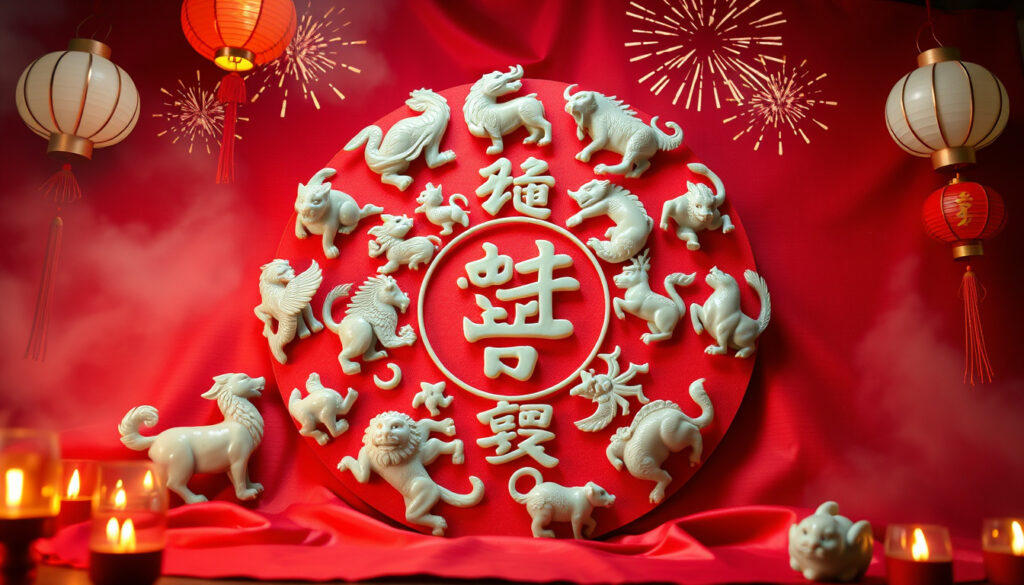
Chinese New Year Animals – 12 Zodiac Signs Guide
The Chinese zodiac assigns one of twelve animals to every year, creating a cycle that has shaped cultural traditions across East Asia for centuries. Combined with five elements and yin-yang polarity, these signs offer insights into personality, relationships, and destiny.
Each animal brings distinct characteristics that influence how people born in its year are perceived. The system, known as Shengxiao, repeats every 12 years for individual animals and every 60 years for complete zodiac combinations. This makes the zodiac both a tool for self-reflection and a living calendar that millions follow when planning celebrations, careers, and personal milestones.
What is my Chinese zodiac sign?
Identifying your zodiac sign requires knowing your birth year and confirming it against the lunar calendar. Chinese New Year falls between late January and mid-February, meaning people born in January or early February may belong to the previous year on the zodiac cycle.
Quick reference overview
Repeats every 12 years in fixed order: Rat, Ox, Tiger, Rabbit, Dragon, Snake, Horse, Goat, Monkey, Rooster, Dog, Pig.
Wood, Fire, Earth, Metal, and Water rotate with yin-yang polarity across the 60-year sexagenary cycle.
Zodiac years align with Lunar New Year, not January 1. Dates vary between late January and mid-February.
Each animal carries core characteristics modified by its associated element and polarity.
How to calculate your zodiac sign
To find your sign, subtract multiples of 12 from your birth year until you reach a year that matches the animal order. Then confirm whether your birth date falls before or after that year’s Lunar New Year. For example, a person born in 1985 subtracts 12 repeatedly until reaching 1961, then adjusts forward to the Rat year cycle to confirm their sign.
- Identify your birth year and locate it on the zodiac year chart.
- Subtract 12-year intervals to find the matching animal in the cycle.
- Verify your birth date against the Lunar New Year date for that year.
- Match the year to its element using the yearly combination table.
- Confirm yin-yang polarity to complete your full zodiac profile.
Zodiac years reference table
| Year | Animal | Element | Yin/Yang |
|---|---|---|---|
| 2020 | Rat | Metal | Yang |
| 2021 | Ox | Metal | Yin |
| 2022 | Tiger | Water | Yang |
| 2023 | Rabbit | Water | Yin |
| 2024 | Dragon | Wood | Yang |
| 2025 | Snake | Wood | Yin |
| 2026 | Horse | Fire | Yang |
| 2027 | Goat | Fire | Yin |
| 2028 | Monkey | Earth | Yang |
| 2029 | Rooster | Earth | Yin |
What do the Chinese New Year animals mean?
Each animal in the zodiac carries symbolic meaning that influences the traits attributed to people born in its year. These characteristics are shaped by cultural observation and centuries of astrological tradition, forming a language of personality that remains relevant in modern East Asian society.
Core personality traits by animal
The Rat represents intelligence and resourcefulness, qualities that traditionally symbolise adaptability in challenging circumstances. The Ox embodies reliability and determination, reflecting a reputation for steady, persistent effort. Tigers are described as brave, passionate, and independent, with natural leadership qualities and high self-esteem. Rabbit years bring quiet elegance, kindness, and a strong sense of responsibility.
Dragon-born individuals are seen as lucky, imaginative, and charismatic, with an adventurous and ambitious streak. Snakes carry associations with philosophy, organisation, and intuition, often described as elegant and decisive. Horse years produce people characterised as adaptable, loyal, courageous, and intelligent, with a notable appetite for adventure. The Goat or Sheep symbol brings creativity, compassion, and emotional warmth, alongside an appreciation for beauty and craftsmanship.
Pig years produce individuals described as generous and good-humoured, with a love of comfort and an easygoing outlook. These traits interweave with the broader cultural significance of each animal, influencing everything from career advice to relationship compatibility.
Trait descriptions vary across sources and regions. What one tradition emphasises, another may soften or reinterpret based on local cultural values and historical context.
Chinese New Year animals by year
The complete zodiac cycle runs through twelve animals in a fixed sequence that has remained consistent across generations. This order originated in folklore and was traditionally used to date years and describe personality patterns across Chinese society.
Complete animal order and sequence
The animals cycle in this fixed order: Rat, Ox, Tiger, Rabbit, Dragon, Snake, Horse, Goat, Monkey, Rooster, Dog, and Pig. Each animal appears once every 12 years, making the cycle straightforward to follow once the current year is identified. The sequence is rooted in legend, where animals finishing a race determined their positions in the zodiac calendar.
Recent decades show the pattern repeating reliably. The 1990s began with the Horse in 1990, cycling through each animal to reach the Rat again in 1996 and 2008. This predictability allows anyone to calculate zodiac years forward or backward by simply counting in 12-year increments from any known reference point.
What are the Chinese New Year animals and elements?
The zodiac system layers five elements over the 12-animal cycle, adding depth and nuance to each year’s meaning. Each element carries its own symbolic weight, modifying the base traits of the animal with qualities associated with Wood, Fire, Earth, Metal, or Water.
Element meanings and their influence
Wood represents growth, expansion, and vitality. Fire symbolises passion, energy, and transformation. Earth brings stability, patience, and grounding. Metal is associated with strength, structure, and clarity. Water embodies adaptability, wisdom, and sensitivity.
These elements rotate every two years while alternating yin-yang polarity. Wood Rat (Yang) in 2024 is followed by Wood Snake (Yin) in 2025, then Fire Horse (Yang) in 2026 and Fire Goat (Yin) in 2027. This creates 60 unique combinations that fully cycle before repeating, a pattern known as the sexagenary cycle.
An element modifies rather than overrides the animal’s core traits. A Fire Dragon differs from a Wood Dragon in temperament, yet both carry the fundamental Dragon qualities of charisma and ambition.
What animal is Chinese New Year 2026?
Chinese New Year 2026 falls in February and marks the Year of the Fire Horse. This is a Yang year, carrying associations with energy, ambition, and forward momentum. People born after the Lunar New Year in 2026 will be Fire Horses by zodiac.
The Horse animal brings traits of adaptability, loyalty, and courage. Combined with the Fire element and Yang polarity, this year is associated with enthusiasm, drive, and social vitality. The Horse’s reputation for being intelligent and adventurous becomes more pronounced under Fire’s transformative energy.
What animal is Chinese New Year 2027?
The following year, 2027, brings the Year of the Fire Goat. Unlike the preceding Horse year, this is a Yin year, carrying qualities of calm, introspection, and nurturing warmth. The Goat or Sheep animal is strongly associated with creativity, compassion, and emotional depth.
The Fire element adds passion and expressive energy to the Goat’s naturally gentle disposition. This combination produces a year influenced by artistic pursuits, community connection, and thoughtful leadership. Fire Goat years are often linked with creative industries and roles requiring empathy and intuition.
What is the story of the Chinese New Year animals?
The zodiac’s origin is rooted in Chinese folklore, most commonly attributed to a great race called by the Jade Emperor. According to legend, the Emperor invited all animals to a race and promised a position in the calendar to the first twelve to finish. This story, preserved across generations, explains both the order of the animals and their symbolic roles in the zodiac system.
The race and the order
The Rat won by hitching a ride on the Ox’s back and jumping ahead at the finish line, securing first position. The Ox came second, followed by the Tiger. The Rabbit crossed on floating logs, while the Dragon flew but paused to help others, arriving fifth. The Snake moved by hiding on the Horse’s hoof, allowing it to finish sixth ahead of the Horse itself.
The Goat, Monkey, and Rooster followed, having crossed together on a raft. The Dog came next after playing in the water, and the Pig arrived last after pausing for food during the race. This finishing order established the sequence used in the zodiac to this day, with each animal’s journey and choices reflecting the traits attributed to people born under its sign.
Different regions and traditions offer alternative versions of the race story. Some versions name the Goat as Sheep, and details about how each animal crossed vary by source. What remains consistent is the order of the twelve animals and their general symbolic significance.
Understanding zodiac certainty and limitations
| Established information | Areas with uncertainty |
|---|---|
| 12-animal cycle follows fixed order | Exact birth date for borderline cases |
| Zodiac aligns with lunar calendar | Precise Lunar New Year date varies by astronomical observation |
| 5 elements rotate every 2 years | Regional interpretation of combined traits |
| 60-year complete sexagenary cycle | Some animal trait descriptions lack universal consensus |
| Year of Horse = 2026, Year of Goat = 2027 | Predicted trait interactions remain interpretive |
Chinese zodiac in cultural context
The Chinese zodiac extends beyond individual personality readings. It influences career guidance, relationship matching, business decisions, and major life planning across East Asian cultures. Employers and families consult zodiac compatibility for partnerships, and many people choose wedding dates or business launches based on favourable zodiac alignments.
The system also appears in popular media, marketing campaigns, and educational curricula. During Lunar New Year, zodiac animals dominate public decoration, gift-giving, and digital communications. This cultural integration demonstrates how a traditional calendar system continues to shape daily life centuries after its establishment.
Travellers exploring Chinese New Year traditions often encounter zodiac symbolism in festive markets, temple decorations, and ceremonial performances throughout East Asia.
Sources and cultural references
The zodiac originates from ancient Chinese astrology tied to the lunar calendar’s 12 full moons per year, with animals selected for a race called by the Jade Emperor in folklore.
— Liverpool Museums, cultural archives
Academic sources and cultural institutions provide the primary foundation for zodiac knowledge. The sexagenary cycle mechanics are documented across encyclopedic references, while cultural organisations compile trait descriptions across the twelve animals. Educational platforms like LingoAce and travel resources offer accessible explanations that bridge traditional knowledge with contemporary understanding.
The BBC’s educational materials bring the subject to younger audiences through interactive features, while Wikipedia provides encyclopedic depth with cited references. Each source contributes to a broader picture that combines folklore, astronomy, and cultural tradition into the system millions follow today.
Summary
The Chinese zodiac presents a 12-animal cycle modified by five elements and yin-yang polarity, creating 60 unique combinations that repeat across generations. The sequence runs from Rat to Pig, with each animal bringing distinctive traits that shape how people are perceived and how they see themselves. Recent years show the Dragon in 2024, Snake in 2025, Horse in 2026, and Goat in 2027, each carrying their respective element and polarity. The system’s cultural significance spans personality assessment, relationship compatibility, and major life planning, making it a living tradition that continues to influence millions. Understanding your own sign requires only your birth year, confirmation against the lunar calendar, and reference to the combination tables that map animals and elements together.
Frequently asked questions
What is my Chinese zodiac sign and element?
Find your birth year on a zodiac chart, subtract 12-year intervals until you match an animal, then confirm your element using the yearly table. Your element is determined by the year itself, not the animal alone.
Which animal corresponds to Chinese New Year 2027?
2027 is the Year of the Goat, also called Sheep, paired with the Fire element and Yin polarity. The Lunar New Year for 2027 falls in late January or February.
How accurate are zodiac personality traits?
Zodiac traits are cultural traditions, not scientific measurements. They serve as a framework for self-reflection and cultural identity rather than definitive psychological profiles.
Can my zodiac sign change during my lifetime?
No. Your zodiac sign is determined by your birth year and remains fixed. Only people born on the cusp of Lunar New Year may occasionally dispute their sign, depending on the exact date.
What does the Wood element represent in the zodiac?
Wood symbolises growth, vitality, and expansion. In the zodiac cycle, it represents years of new beginnings, creative energy, and developing potential.
Why does the zodiac repeat every 60 years?
Because 12 animals multiplied by 5 elements equals 60 unique combinations. Each animal appears with each element once before the full cycle repeats, creating the sexagenary cycle.
More related posts
 Michelle Williams – How to Tell the Actress and Singer Apart
 Loddon Valley Leisure Centre – Facilities Hours Membership Guide
 Olivia Wilde – Biography, Movies, and Current Status
 Christopher Chung – Biography, Roles, and Personal Life Facts
 Radio 2 in the Park 2026 – Tickets, Lineup & Complete Guide
 Ginevra Weasley – Complete Character Biography and Verified Facts
 Grace Dent – Biography, Career, Personal Life and 2025 News
 Angela Lansbury – Her Life, Career and Lasting Legacy