Can You Take Aerosols on a Plane – UK Rules Guide
Aerosol cans are a common sight in bathrooms and travel bags, but navigating their rules on flights can feel confusing. Whether you’re packing deodorant for a weekend break or hairspray for a special occasion, knowing exactly what you’re allowed to bring through airport security matters. The good news is that aerosols are generally permitted on UK flights, though strict limits apply depending on whether you’re putting them in hand luggage or checked baggage.
UK aviation regulations classify aerosols as liquids, which means they fall under the same restrictions that govern other fluids at security checkpoints. These rules are enforced by the Civil Aviation Authority and apply across all UK airports, though some airports have recently upgraded their screening technology to allow larger container sizes. Understanding these distinctions can save you time at the airport and prevent last-minute decisions about what to keep or discard.
Can You Take Aerosols in Hand Luggage?
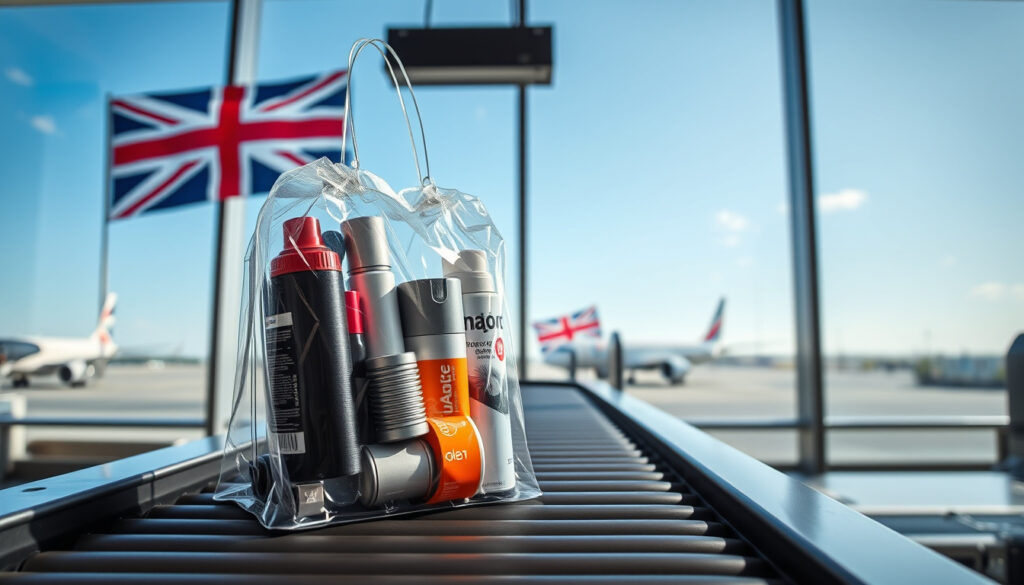
Yes, aerosols can be taken in hand luggage, but they must comply with specific container size and packaging requirements. At most UK airports, all aerosols and liquids carried in cabin baggage must be in containers holding no more than 100ml each. These containers must fit inside a single transparent, resealable plastic bag measuring approximately 20x20cm, with a total capacity of around one litre. The bag must be fully closed and presented separately during security screening.
100ml per container, all in 1L plastic bag
Up to 2kg/2L total, no 100ml limit
CAA and Gov.uk regulated
Check EasyJet, British Airways, Ryanair
Several major UK airports, including Heathrow and Gatwick, have installed advanced screening technology that allows passengers to carry liquids and aerosols in containers up to two litres without using a plastic bag or removing items from hand luggage. Rules vary significantly between airports, so checking your departure airport’s current policy before travelling is always advisable.
Common examples of aerosols travellers want to bring include deodorant, hairspray, dry shampoo, and body spray. All count as liquids under UK regulations. It is also worth remembering that aerosols cannot be used during the flight, as the enclosed cabin environment makes their discharge inappropriate and potentially disruptive to other passengers.
Medical and Exemption Categories
Certain travellers can bring larger quantities of aerosols in hand luggage under exemption categories. Those with essential medical needs may carry up to two litres total, though a doctor’s letter or medical documentation may be required. Parents travelling with babies or young children can bring essential milk, food, or sterilised water without volume restrictions, though airport staff may ask to taste or verify the contents. Special dietary requirements and duty-free purchases sealed in tamper-evident bags with valid receipts also qualify for exemptions at most checkpoints.
| Type of Aerosol | Hand Luggage Limit | Checked Baggage Limit |
|---|---|---|
| Deodorant (standard) | 100ml in 1L bag | Up to 2kg/2L total |
| Hairspray | 100ml in 1L bag | Up to 2kg/2L total |
| Dry shampoo | 100ml in 1L bag | Up to 2kg/2L total |
| Perfume/body spray | 100ml in 1L bag | Up to 2kg/2L total |
| Medical aerosols | Up to 2L with documentation | No standard limit |
| Sports aerosols (non-flammable) | 100ml in 1L bag | Up to 2kg/2L total |
Aerosol Rules for Specific Airlines Like EasyJet and British Airways
Major UK airlines operate under the same fundamental regulations set by the Civil Aviation Authority and UK government, but they each provide specific guidance to help passengers understand what applies to their journey. Understanding these airline-specific policies can prevent surprises at the gate and help you pack more efficiently.
British Airways
British Airways passengers should follow standard UK hand luggage rules for aerosols, meaning containers of 100ml or less placed in a one-litre transparent bag. At airports with updated screening technology such as Heathrow and Gatwick, larger containers up to two litres are permitted. As with all carriers, aerosols cannot be used during the flight under any circumstances. For checked baggage, British Airways allows non-flammable toiletries and aerosols for personal use, subject to International Air Transport Association limits of 500g or 500ml per item and a maximum of two kilograms or two litres per person. All containers must have secure seals and protected spray valves to prevent leakage during transit.
EasyJet
EasyJet follows the same core regulations as other UK carriers, requiring hand luggage aerosols to be in containers of 100ml or less, all contained within a single one-litre plastic bag. At airports like Gatwick that have introduced newer screening technology, larger containers may be accepted. The airline advises passengers who may need additional products to purchase them airside after security clearance, where larger sizes are typically available for immediate use or as duty-free items. Checked baggage follows standard IATA and UK government rules.
Ryanair
Ryanair aligns with UK government and Civil Aviation Authority guidance, applying the standard 100ml container limit for hand luggage aerosols at all airports the carrier operates from. The airline does not publish additional specific restrictions beyond government regulations, meaning passengers should ensure they comply with standard rules. Checked baggage allowances follow standard regulations, though passengers should verify current policies before packing.
Always check your specific airline’s website and your departure airport’s current security requirements before packing. Technology rollouts at UK airports are ongoing, and rules can vary even between terminals at the same location. Destination countries may impose stricter limits, particularly for flights to the United States and Australia.
Can You Pack Aerosols in Checked Baggage?
Checked baggage offers considerably more flexibility for travellers wanting to bring aerosols. Unlike hand luggage, there is no 100ml container limit for aerosols placed in the hold. However, International Air Transport Association regulations set their own constraints: each individual aerosol article must not exceed 500g or 500ml, and the total combined weight or volume of all aerosols per passenger cannot exceed two kilograms or two litres.
Common items travellers pack in checked bags include hairspray for styling, perfumes and colognes, deodorant in larger formats, dry shampoo, and non-flammable sporting aerosols such as those used for tennis racket grip maintenance or waterproofing equipment. All items must be for personal use rather than commercial purposes.
Safety Requirements for Checked Aerosols
Proper packaging is essential when placing aerosols in checked baggage. All containers must have secure seals and lids to prevent accidental discharge during the journey. Spray valves should be protected, either by placing caps over them or wrapping the canisters to prevent accidental activation. The baggage handling environment involves changes in pressure and temperature, making secure containment critical for safety.
Flammable aerosols are generally prohibited in both hand luggage and checked baggage. Drinks exceeding 70% alcohol content are banned entirely, regardless of which type of bag they travel in. Medical supplies that exceed standard limits may be transported with a doctor’s letter or appropriate medical documentation.
Hand Luggage Liquid Limits Including Aerosols
The 100ml rule for hand luggage applies to all liquids, gels, pastes, and aerosols at UK airports. This restriction has been in place since 2006 following security assessments, though some airports are now moving away from the requirement to use plastic bags thanks to improved screening equipment. Understanding these limits helps ensure you don’t arrive at security with items that cannot pass through.
The one-litre plastic bag typically provided at airports can accommodate several small containers, but it fills quickly if you are carrying multiple products. Most travellers can fit one or two full-size travel containers of 100ml along with smaller items like toothpaste and moisturiser. Planning your toiletries around these constraints means fewer decisions at security.
Powder Restrictions for Flights to the United States
Passengers travelling to the United States should be aware of additional powder restrictions that apply to hand luggage. The Transportation Security Administration limits powders to 350g or 350ml in cabin baggage, which can affect certain aerosol products that contain powder components. Medical powders are exempt when accompanied by appropriate documentation, allowing patients to travel with necessary medications and treatments.
What Items Are Not Allowed in Hand Luggage?
Beyond the standard 100ml liquid restriction, UK hand luggage rules prohibit several categories of items that travellers sometimes attempt to bring. Sharp objects including knives, scissors with blades longer than six centimetres, and sharp tools must travel in checked baggage. Sporting equipment such as cricket bats, golf clubs, and hockey sticks must also be placed in the hold.
Flammable items including matches, lighter fuel, and certain aerosol types (those classified as flammable and toxic under shipping regulations) are banned from both hand and checked baggage. Explosive and incendiary substances, compressed gases, and corrosive materials are similarly prohibited. Lighters are permitted in pocket or hand luggage under certain conditions, but matches are banned outright.
- Sharp objects and bladed articles
- Flammable liquids and gases
- Explosive and incendiary materials
- Corrosive substances
- Compressed gases (except medical oxygen)
- Matches and lighter fuel
- Flammable aerosols
The Colour Wow Dream Coat styling range demonstrates how personal care products fit within these regulations, with aerosol-based formulas subject to the same container limits as other liquids. travellers using similar products should ensure their items comply with hand luggage restrictions or pack them in checked baggage instead.
How Hand Luggage Rules Have Changed Over Time
Airport security restrictions have evolved significantly since the early 2000s in response to changing threat assessments and technological developments. Understanding this timeline provides context for current rules and helps explain why certain restrictions exist.
- November 2006: The 100ml liquid rule was introduced across UK and EU airports following a terrorist threat assessment. Passengers were required to place all liquids in containers of 100ml or less.
- 2007 onwards: Plastic bag requirements became standard at all UK airports, with security staff checking containers and bag closure before permitting passage through checkpoints.
- 2019: Initial trials of advanced scanning technology began at some UK airports, allowing larger liquid containers without bag requirements.
- 2024 to present: Several major airports including Heathrow and Gatwick have deployed updated systems that permit containers up to two litres in hand luggage, removing the need for plastic bags at those locations.
Not all UK airports have upgraded their screening equipment. While Heathrow and Gatwick can accept larger containers without plastic bags, many regional airports continue to apply the standard 100ml and one-litre bag requirements. Always verify your specific airport’s current capabilities before travelling to avoid delays or unexpected bag restrictions.
What We Know and What Remains Uncertain
UK aviation regulations regarding aerosols are well-established and consistently enforced across the industry. Travellers can rely on several clear facts when planning their packing strategy.
- Aerosols count as liquids under UK rules
- Hand luggage limit: 100ml containers
- Checked baggage: up to 2kg/2L total
- Non-flammable aerosols permitted in limits
- Medical exemptions up to 2L available
- Airlines follow CAA/Gov.uk regulations
- Airport-specific technology adoption rates
- Destination country restrictions
- Specific airline implementation details
- Timeline for wider technology rollout
- Exact documentation requirements for exemptions
The UK Civil Aviation Authority provides authoritative guidance on aerosol transport, with additional information available through the government’s official aviation security pages. Airlines and airports maintain their own guidance that reflects both official regulations and local implementation decisions.
Why These Restrictions Exist
Airport security restrictions on liquids and aerosols exist primarily to manage risks associated with certain threat scenarios involving flammable materials and pressurized containers. The aviation industry operates under international security frameworks that require consistent application of screening standards across all airports and carriers.
UK-specific regulations align with broader European Union standards that were harmonised following coordinated security assessments in the mid-2000s. These rules apply to all passengers departing from UK airports regardless of their destination, though arrival requirements may differ based on the rules in place at the country of origin.
The Fleet Air Arm Museum in Yeovilton houses aircraft and artefacts that illustrate how aviation security and regulation have evolved over decades, providing historical context for modern restrictions. Understanding this evolution helps contextualise why current rules are structured as they are.
Official Sources and Expert Guidance
“The total net quantity of liquids in hand luggage must not exceed 100 millilitres per container, with all containers fitting within a single transparent resealable bag not exceeding one litre in capacity.”
— Civil Aviation Authority guidance on hand luggage restrictions
“For checked baggage, aerosols for sporting or domestic use are permitted, but each article must not exceed 500g or 500ml, and the total quantity must not exceed 2kg or 2L per passenger.”
— International Air Transport Association dangerous goods regulations
Primary sources for current regulations include the Gov.uk hand luggage restrictions page, which provides the official government position on what passengers can carry. The liquids-specific guidance offers detailed information on container sizes, packaging requirements, and exemptions. Individual airline websites such as British Airways baggage essentials and EasyJet restricted items guidance translate these regulations into practical packing advice.
Summary: Key Points for Travellers
Aerosols are permitted on UK flights in both hand luggage and checked baggage, subject to different rules for each. Hand luggage restrictions mean keeping containers at 100ml or less, typically within a one-litre plastic bag, though some airports with updated technology allow larger containers. Checked baggage permits up to two litres total of non-flammable aerosols per person, with each item limited to 500ml or 500g.
Checking your departure airport’s current capabilities and your specific airline’s policy before packing remains the most reliable way to ensure compliance and avoid last-minute problems at security. Medical exemptions and baby product allowances provide flexibility for those with genuine need, while flammable aerosols and drinks exceeding 70% alcohol remain prohibited in both cabin and hold luggage.
Frequently Asked Questions
Can you bring aerosol cans on a plane?
Yes, aerosol cans can be transported on UK flights. In hand luggage, containers must hold 100ml or less and fit in a one-litre plastic bag at most airports. In checked baggage, larger containers up to 500ml per item are permitted, with a total limit of two litres per passenger.
Can you fly with aerosols in carry-on luggage?
Yes, aerosols can be carried in hand luggage (carry-on) provided they comply with the 100ml container rule and are placed in a transparent resealable bag. Some airports with advanced screening technology allow containers up to two litres without a plastic bag.
What items are not allowed on a plane in hand luggage?
Hand luggage restrictions prohibit sharp objects, flammable materials, explosive substances, corrosive chemicals, compressed gases, matches, and lighter fuel. All liquids including aerosols must be in containers of 100ml or less (except at airports with updated screening).
Can you take deodorant aerosol on a UK plane?
Yes, aerosol deodorant can be taken on UK flights. In hand luggage it must be in a container of 100ml or less, fitting in a one-litre plastic bag. Larger sizes can be placed in checked baggage, subject to the two-litre total limit.
How much liquid can you take on a plane in hand luggage?
Standard hand luggage limits allow containers of up to 100ml, all fitting within a one-litre transparent plastic bag. Some UK airports with newer technology allow containers up to two litres without a bag requirement. Exemptions for medical needs, baby products, and duty-free purchases can increase the limit to two litres total.
Do EasyJet allow aerosols in hand luggage?
Yes, EasyJet follows standard UK aviation rules. Aerosols must be in containers of 100ml or less placed in a one-litre plastic bag at most airports. At airports like Gatwick with updated technology, larger containers may be permitted. Check the specific airport and EasyJet guidance before travelling.
More related posts
 South Atlantic Anomaly Magnetic Field NASA – Key Facts 2025
 David Wenham – Biography, Movies, Height, and Key Facts
 Partidos de Premier League – 2025/26 Season Fixtures, Results & Standings
 How Many Second in a Year – Full Breakdown for Every Type
 Mr and Mrs Smith Hotels – Guide to Curated Boutique Stays
 Paul Arthurs – Biography, Net Worth and Oasis Career
 Lyndon Dykes – Age, Height, Wife, Stats & Career (2025)
 Translate Norwegian to English – Best Free Tools and Tips