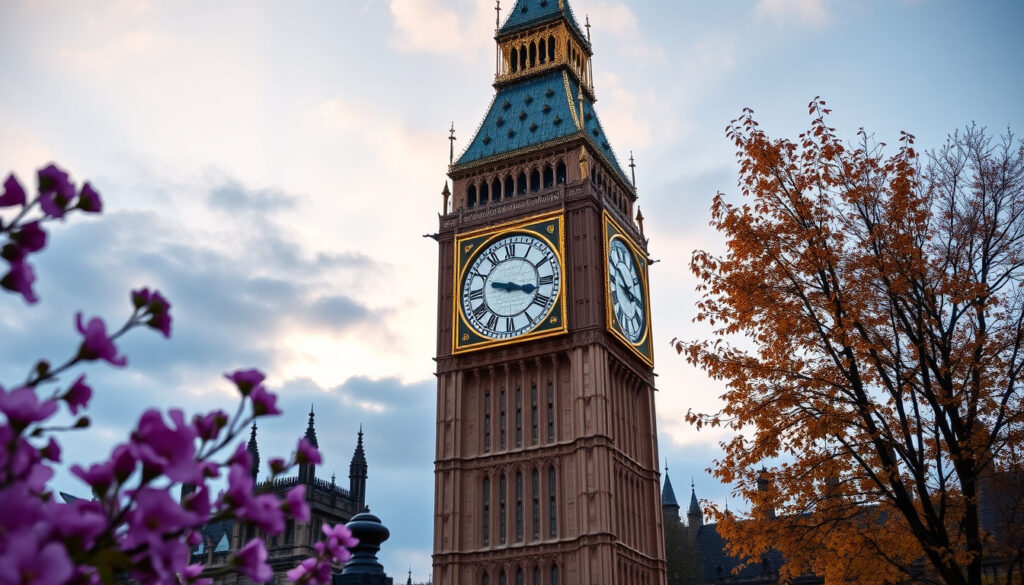
UK Time Change 2025 – Clocks Forward 30 March, Back 26 October
The United Kingdom operates a twice-yearly clock change that shifts time between Greenwich Mean Time and British Summer Time. In 2025, these transitions follow established legal dates that remain unchanged from previous years, affecting everything from sunrise and sunset times to digital systems and travel schedules.
Understanding when these changes occur and how they impact daily life helps residents, businesses, and visitors prepare for the shift. The system, governed by the Summer Time Order 2002, provides additional evening daylight during summer months while returning to standard time for winter.
When Do the Clocks Change in the UK in 2025?
The 2025 clock changes in the UK follow the same predictable schedule that has been in place since 2002. Both transitions occur on Sundays to minimize disruption to schools, businesses, and commuters.
On Sunday, 30 March, clocks advance from 1:00am Greenwich Mean Time to 2:00am British Summer Time. This change marks the official start of BST, adding an hour of daylight to evenings at the expense of mornings. The autumn transition occurs on Sunday, 26 October, when clocks retreat from 2:00am BST to 1:00am GMT, restoring standard time for the winter period.
The 210-day summer period runs approximately seven months, providing residents with extended daylight during typical working and leisure hours. According to the official government guidance, these dates are fixed by law and apply uniformly across the entire United Kingdom.
Key Facts About the 2025 UK Clock Changes
- Clocks spring forward on the last Sunday in March (30th) at 1:00am GMT
- Clocks fall back on the last Sunday in October (26th) at 2:00am BST
- British Summer Time runs for 210 days, approximately seven months
- The time shift adds one hour to GMT, creating BST (UTC+1)
- All four UK nations—England, Scotland, Wales, and Northern Ireland—follow identical dates
- Changes occur Sunday mornings to reduce disruption to schools and businesses
- The shortest day of 2025 falls on 21 December with sunset around 15:54
| Event | Date | Standard Time | Action Required |
|---|---|---|---|
| Clocks Forward | 30 March 2025 | 01:00 GMT | Set forward 1 hour |
| Clocks Back | 26 October 2025 | 02:00 BST | Set back 1 hour |
| Winter Solstice | 21 December 2025 | Shortest day | Approximately 7h 49m daylight |
The 2025 clock change dates differ slightly from neighboring years. In 2024, changes occurred on 31 March and 27 October, while 2026 will see clocks shift on 29 March and 25 October. This variation occurs because the dates fall on the last Sunday of each respective month.
What is British Summer Time and Why Does It Exist?
British Summer Time represents the period when clocks in the United Kingdom are set one hour ahead of Greenwich Mean Time. The system aims to maximize daylight hours during evenings, particularly during spring and summer months when daylight is naturally more abundant.
The concept emerged from William Willett’s 1907 publication “The Waste of Daylight,” which argued that shifting time would allow people to enjoy more sunlight during evening hours. Although Willett died before seeing his proposal enacted, the Summer Time Act 1916 introduced the first British Summer Time period, running from 21 May to 1 October that year.
The Purpose Behind Daylight Saving Time
BST serves multiple practical purposes that extend beyond simple convenience. By shifting an hour of morning daylight to evening hours, the system provides additional daylight during typical work and leisure times.
The arrangement offers benefits for recreation, allowing people more natural light for outdoor activities after work. Additionally, the extended evening daylight reduces energy consumption for lighting, though the extent of these savings has been debated in various studies.
During BST, sunrise occurs later in the morning while sunset shifts to approximately 20:00 or later in southern England. Northern regions experience more dramatic effects, with some areas seeing sunrise not occurring until nearly 10:00 during midwinter under GMT.
How the System Has Evolved
Between 1916 and the mid-1990s, the rules governing British Summer Time underwent numerous changes. The Summer Time Act 1972 standardized arrangements within the United Kingdom, though dates varied according to specific Saturdays near Easter.
Since 1996, the current system has been in place following alignment with European Union directives. EU Directive 2000/84/EC standardized daylight saving arrangements across member states, setting the forward change on the last Sunday in March and the backward change on the last Sunday in October. After Brexit, the United Kingdom retained these arrangements through the Summer Time Order 2002.
Does the 2025 Time Change Apply Across the Whole UK?
The clock change in 2025 applies uniformly across all four nations of the United Kingdom. England, Scotland, Wales, and Northern Ireland follow identical dates and times for both the spring forward and autumn back transitions.
This synchronized approach ensures consistent scheduling across the integrated UK economy and transportation network. Rail services, flights, and broadcasting maintain consistent timetables throughout the year, with Northern Ireland and the Republic of Ireland also operating the same changes.
Cross-Border Considerations
Northern Ireland shares its time zone arrangements with the Republic of Ireland, meaning travelers crossing the Irish border experience simultaneous changes. This coordination prevents scheduling confusion between the two jurisdictions.
For those traveling between the UK and mainland Europe, it is worth noting that EU countries also follow the same clock change dates, maintaining synchronized transitions across the continent. Travelers should be aware that while clocks change simultaneously, the actual time difference between the UK and continental Europe remains constant at one hour.
Effects on Travel and Transportation
The time change affects flight schedules, rail services, and cross-border transportation. Airlines adjust departure and arrival times to account for the transition, typically implementing schedule modifications in the weeks following each change.
Passengers planning journeys around the change dates should verify their transportation provider’s schedule adjustments. The RAC recommends checking timetables in advance, particularly for early morning services that may be affected differently depending on the direction of the change.
During the autumn transition, the hour between 1:00am and 2:00am effectively repeats once clocks fall back. Some transportation services may operate on restricted schedules during this duplicated hour, and travelers should confirm arrangements with operators when booking journeys crossing the change date.
How to Update Your Devices for the UK Time Change in 2025
Modern digital devices typically adjust automatically to clock changes, but understanding how this works helps ensure accuracy and identifies situations requiring manual intervention.
Smartphones, Computers, and Modern Systems
Devices connected to the internet generally synchronize with network time servers and update automatically at the appropriate moment. Smartphones, tablets, and computers running current operating systems should reflect the correct time within seconds of the transition.
Windows, macOS, iOS, and Android devices check their time against internet-based atomic clocks, which account for time zone changes and daylight saving adjustments. Most users will notice no disruption beyond the instant their devices update.
Standalone Devices and Manual Clocks
Devices that do not connect to the internet require manual adjustment. This category includes traditional analog clocks, some digital watches, car clocks, and older appliances with built-in timekeeping functions.
For the spring forward on 30 March, these devices need to be set forward one hour manually. For the autumn back on 26 October, they should be set back one hour. Some devices feature automatic adjustment through radio signals, though these remain relatively uncommon.
Before each transition, verify that smartphones and computers have automatic updating enabled. Check standalone devices including wall clocks, alarm clocks, microwave ovens, and central heating timers. Some central heating programmers that operate on time schedules may need particular attention, as incorrect settings could affect morning heating cycles.
Business and Industrial Systems
Industrial control systems, data logging equipment, and scheduling software may require specific attention before the transition. Organizations should review systems that rely on accurate time recording for compliance, payroll, or operational purposes.
The Xoserve guidance on the 2025 British Summer Time change notes that systems such as UK LINK and Gemini automatically adjust at the relevant transition point, though organizations should verify their specific configurations.
Will There Be Any Changes to UK Time Change Rules in 2025?
No changes to UK time change rules are scheduled for 2025. The current system, established under the Summer Time Order 2002, remains in place with the familiar forward transition on the last Sunday of March and backward transition on the last Sunday of October.
Despite ongoing debates about daylight saving time reform, no legislative changes have been announced. The government has not introduced any proposals to abolish the twice-yearly changes or to adopt permanent British Summer Time.
The Debate Over Permanent Daylight Saving Time
Advocates for reform have long argued for permanent British Summer Time or Double Summer Time, claiming such arrangements would reduce evening energy consumption and provide longer summer evenings. Campaigners suggest the economic benefits of additional daylight hours would outweigh any drawbacks.
Opposition to permanent BST concentrates particularly in northern regions of Scotland and northern England, where winter mornings would see sunrise delayed until nearly 10:00. Parents and safety advocates have raised concerns about children walking to school in darkness during winter months.
The Daylight Saving Bill, debated in Parliament between 2010 and 2012, examined the possibility of year-round British Summer Time but did not reach the statute books. The bill faced opposition from Scottish MPs who highlighted the particular concerns for their constituencies.
Historical Development of UK Time Change Rules
The journey to the current standardized system spans over a century of legislative adjustments. Each era reflected contemporary priorities regarding energy conservation, agricultural interests, and alignment with European partners.
- 1916 — First British Summer Time introduced under the Summer Time Act 1916, running 21 May to 1 October
- 1972-1995 — Variable periods determined by third or fourth Saturdays near Easter under the Summer Time Act 1972
- 1996 onwards — Standardized to last Sunday in March and October following EU Directive 2000/84/EC
- 2002 — Summer Time Order 2002 retained EU-aligned arrangements after Brexit
- 2025 — Current rules continue unchanged with forward change 30 March, back change 26 October
Understanding the UK Time Change: What’s Established and What Remains Unclear
Much about the UK time change system is clearly defined through legislation, while other aspects remain subjects of ongoing discussion and research.
| Established Information | Information That Remains Debated |
|---|---|
| Clock change dates for 2025 are confirmed by law | Whether permanent BST would provide net energy savings |
| The shift occurs at 1:00am GMT forward and 2:00am BST back | Long-term health effects of circadian rhythm disruption |
| All UK regions follow identical dates and times | Potential for future legislative reform |
| BST runs 210 days from 30 March to 26 October | Whether changing time affects accident rates |
| The system was retained post-Brexit via the 2002 Order | Optimal duration and timing of summer time arrangements |
| Northern Ireland aligns with Republic of Ireland | Economic impact studies show conflicting results |
The factual framework—the specific dates, times, and legislative basis—remains well-documented and consistently applied. Areas of genuine uncertainty include the magnitude of energy savings, precise health implications, and whether alternative arrangements might better serve the population.
The Historical Context of British Summer Time
British Summer Time emerged from a combination of practical concerns and historical circumstances that shaped modern timekeeping in the United Kingdom. Understanding this background illuminates why the current system exists and how it differs from earlier arrangements.
William Willett, a builder from south London, first proposed the idea in 1907 after noticing how many people slept through early morning sunlight while darkness extended into evening hours. His pamphlet “The Waste of Daylight” suggested gradually advancing clocks through spring and summer months, though his untimely death in 1915 preceded the system’s eventual adoption.
The First World War created conditions that accelerated time reform, as governments sought ways to maximize productive daylight hours. Germany and Austria implemented daylight saving in 1916, and the United Kingdom followed shortly after with the Summer Time Act 1916, marking the first official use of British Summer Time.
Throughout the twentieth century, the specific arrangements underwent numerous modifications as governments balanced competing interests. Agricultural stakeholders, industrial workers, educators, and energy planners each influenced the evolving rules. The current standardized system represents a culmination of these historical negotiations.
Sources and Official Information
The authoritative source for UK clock change dates remains the UK Government website, which publishes confirmed dates and provides downloadable calendar files for electronic devices.
“Clocks spring forward on the last Sunday in March and fall back on the last Sunday in October.”
— UK Government guidance, gov.uk/when-do-the-clocks-change
The Summer Time Order 2002 provides the current legislative framework, while the Summer Time Act 1972 established earlier arrangements. Historical records from the Royal Museums Greenwich document the development of British Summer Time from its origins to the present day.
For specific guidance on health effects and sleep disruption associated with clock changes, research suggests that the spring forward particularly affects circadian rhythms, creating temporary grogginess commonly described as “social jetlag.”
Summary
The UK time change in 2025 follows the established pattern with clocks advancing on 30 March and retreating on 26 October. These dates, governed by the Summer Time Order 2002, apply uniformly across all UK nations and remain unchanged from previous years.
While debates continue about potential reforms to the daylight saving system, no changes are planned for 2025. Residents should ensure their digital devices are configured for automatic updates while manually adjusting standalone clocks and timers. For those planning travel or events around these dates, checking specific transportation and service schedules remains advisable. The system provides additional evening daylight during summer months while maintaining the familiar rhythm of twice-yearly clock adjustments that has characterized UK timekeeping for over a century.
Frequently Asked Questions
What is the duration of British Summer Time in 2025?
British Summer Time spans 210 days in 2025, running from 30 March to 26 October. This represents approximately seven months of the year, during which clocks remain one hour ahead of Greenwich Mean Time.
Does the time change affect travel in 2025?
Yes, the time change affects flights, rail services, and cross-border transportation. Airlines adjust schedules following the transition, and passengers should verify journey times when booking travel around change dates. The RAC provides guidance on travel considerations.
What time do the clocks change in 2025?
In spring 2025, clocks advance from 1:00am GMT to 2:00am on Sunday, 30 March. In autumn 2025, clocks retreat from 2:00am BST to 1:00am GMT on Sunday, 26 October.
Will the UK abolish daylight saving time in 2025?
No abolition of daylight saving time is scheduled for 2025. The current system continues unchanged, and no government proposals for reform have been announced.
Do clocks change at the same time across Scotland, England, Wales, and Northern Ireland?
Yes, all four nations of the United Kingdom follow identical clock change dates and times. The entire country transitions together, maintaining consistent scheduling across the nation.
How do I prepare my central heating timer for the clock change?
Central heating timers and programmers should be checked before each transition. If set to operate at specific clock times, these devices will need manual adjustment. Some modern timers update automatically when connected to internet time servers.
What happens to the hour between 1am and 2am during the autumn change?
During the autumn transition, clocks fall back at 2:00am, effectively repeating the hour from 1:00am to 2:00am. Some services may operate on restricted schedules during this period, and it is advisable to check specific arrangements with transportation providers.
Does British Summer Time affect Scotland differently than southern England?
All regions follow the same clock change schedule, but the practical effects vary. Northern Scotland experiences more extreme daylight variations, with very late sunrises during winter months under GMT and extended daylight during summer evenings under BST.
More related posts
 Last of Us Season 3 – Confirmed Release Window Cast and Story Details
 Teagan Croft – Age, Height, Movies and TV Shows
 Lee Byung-hun – Age, Wife, Career, Movies and Facts
 Demi Moore – Age, Movies, Net Worth and 2026 Updates
 LJ Dubai Bling Husband – Her Marriage to Billionaire Walid Juffali
 Lee Byung-hun – Wife, Movies, Squid Game, Family
 When Should Tyre Pressure Be Checked – Always When Cold
 Can Dogs Eat Peanuts – Safety, Risks and Benefits