Booster Seat Guide 2025 – UK Law, Types and Best Buys
Choosing the right booster seat for your child is one of the most important safety decisions you will make as a parent. In the UK, the law is clear, but the range of products and technical standards can be confusing. This guide breaks down the legal requirements, explains the differences between seat types, and offers practical advice for buying and fitting a booster seat in 2025.
Whether you are moving your child from a forward-facing car seat or looking for a more portable option, understanding the rules around age, height, and weight is essential. We have gathered the key facts from official sources to help you make an informed choice.
When Should a Child Use a Booster Seat?
The transition from a child car seat to a booster seat depends on your child’s size, not just their age. UK law sets clear minimum requirements, but the best time to switch also depends on the specific seat’s weight and height limits.
Children must use a booster seat until 12 years old or 135cm tall (UK law).
Use an EU-approved seat (R44 or R129). Backless boosters allowed for children over 125cm and 15kg.
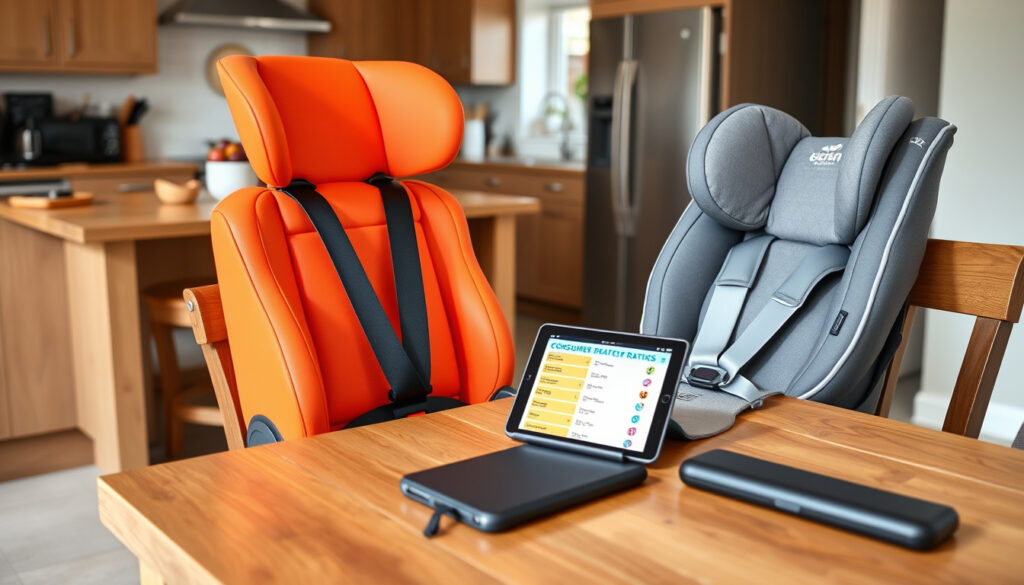
High-back boosters offer head protection; backless are more portable. ISOFIX versions provide easier installation.
Available at Argos, Halfords, Amazon, and specialist retailers. Prices range from £30 to £200+.
Key Insights on Booster Seat Use
- In the UK, a child must use a booster seat from around 4 years old (15kg) until they reach 135cm or age 12.
- Backless booster seats are legal only for children over 125cm tall and weighing more than 15kg.
- ISOFIX booster seats reduce the risk of incorrect installation compared to seatbelt-only models.
- High-back booster seats provide better side-impact protection and head support than backless versions.
- New R129 (i-Size) regulations require booster seats to be used until children are 135cm tall, but many seats are now tested to this standard.
Booster Seat Facts at a Glance
| Fact | Detail |
|---|---|
| Minimum age/weight for booster seat | Approximately 4 years old / 15kg (depending on seat) – see seat label |
| UK legal requirement | Must use child car seat until 12 years or 135cm – which comes first |
| Backless booster legal requirements | Child must be over 125cm tall and weigh at least 15kg |
| Approved safety standards | ECE R44.04 or UN R129 (i-Size) |
| Expiry date | Most booster seats expire 6–10 years after manufacture – check label |
| Installation methods | Seatbelt-only or ISOFIX (some models offer both) |
What Does UK Law Say About Booster Seats?
UK law is straightforward: children must use a child car seat until they are 12 years old or 135 cm tall, whichever comes first. After that, they can use an adult seat belt. This rule applies to all vehicles, including cars, vans, and other goods vehicles, but there are some exceptions for taxis and minibuses in certain circumstances.
The law requires that booster seats be approved under either the older ECE R44 or the newer R129 (i-Size) regulations. Seats must be fitted using either ISOFIX mountings or the vehicle’s diagonal seat belt strap. The seat belt must fit correctly over the child: across the shoulder and chest, not across the neck, and the lap belt must sit low across the hips rather than the stomach.
Backless booster seats are legal in the UK, but only for children over 125 cm tall and weighing more than 15 kg. For new models approved since March 2017, the minimum weight is 22 kg. Older backless boosters made before that change can still be legal for children 15–36 kg, but current safety guidance recommends high-back boosters for younger or smaller children.
Are Backless Booster Seats Legal in the UK?
Yes, backless booster seats are legal, but with restrictions. As noted, they are only permitted for children over 125 cm and 15 kg (or 22 kg for newer models). The RAC and other safety organisations advise that high-back boosters are generally safer because they provide better head and side support, as well as more consistent belt positioning.
What is the Penalty for Not Using a Booster Seat?
If a child is not using the correct car seat or booster seat, the driver can be fined up to £500 and receive three penalty points on their licence. In some cases, the penalty can be higher if the case goes to court.
What Are the Best Booster Seats for Your Car?
Choosing the best booster seat depends on your child’s size, your car’s features, and your budget. The two main types are high-back and backless boosters, and within each category, you can choose between ISOFIX and seatbelt-only models.
High-Back vs. Backless Booster Seats
High-back booster seats include a back and head support. They are generally described as the best choice for comfort and safety because they help position the belt and support the head and neck. Backless booster seats raise the child so the seat belt sits properly, but they provide less side and head support and are generally less recommended for younger children.
For most children still needing a booster, a high-back booster seat is the strongest all-round recommendation because it offers better belt positioning and more protection. A backless booster is more limited and should only be used when the child is large enough and the seat is appropriate for the vehicle and journey.
R44 vs. R129 (i-Size) Standards
The older R44 standard groups seats by weight, such as Group 2/3 boosters. The newer R129 (i-Size) system uses child height rather than weight for many seats and is intended to improve fit and safety consistency. Which? notes that i-Size child seats commonly cover 100 cm to 150 cm, which can span about ages 4 to 12, depending on the seat. All new booster seat designs must comply with R129, but R44 seats remain legal.
ISOFIX vs. Seatbelt Installation
ISOFIX is a lower-anchor system that fixes the seat to the car, reducing installation errors. Guidance also says child seats may be fitted using a seat belt where appropriate. The seat belt must fit correctly over the child: across the shoulder and chest, not across the neck, and the lap belt must sit low across the hips rather than the stomach. Child seats should always be fitted exactly according to the manufacturer’s instructions.
How to Fit a Booster Seat with ISOFIX
Fitting a booster seat correctly is critical for safety. ISOFIX systems are designed to make this easier, but it is still important to follow the steps carefully.
Do All Cars Have ISOFIX?
Most cars manufactured after 2006 have ISOFIX anchor points, but it is always worth checking your vehicle’s manual. The anchor points are usually located between the backrest and the seat cushion of the rear seats.
Can I Install a Booster Seat Without ISOFIX?
Yes, you can install a booster seat using the vehicle’s seat belt. The seat belt must be routed correctly through the belt guides on the booster seat. The belt should lie flat across the child’s shoulder and chest, not touching the neck, and the lap belt should sit low across the hips.
The seat belt must fit correctly over the child: across the shoulder and chest, not across the neck, and the lap belt must sit low across the hips rather than the stomach. If the belt does not fit correctly, the booster seat may not be suitable for your child or your car.
What Is a Booster Seat for a Table?
A booster seat for a table is a different product entirely from a car booster seat. These are portable seats designed for use at dining tables, often with a harness or tray, to help young children sit at the correct height for eating. They are not designed for vehicle use and should never be used in a car.
Table booster seats are typically used for children from around 6 months to 3 years old, depending on the model. They are available from many of the same retailers that sell car booster seats, including Argos and Amazon.
Where to Buy a Booster Seat: Argos, Halfords & Amazon
The three main retailers for booster seats in the UK are Argos, Halfords, and Amazon. Each offers a different shopping experience and range of products.
Argos and Halfords have physical stores where you can see seats in person, and Halfords offers a fitting service. Amazon provides a vast selection with customer reviews, but you cannot try the seat before buying. Prices range from around £30 for a basic backless booster to over £200 for a high-end ISOFIX model with advanced safety features.
When comparing seats, check the child’s height/weight range, the approval standard (R129 vs R44), whether the seat is ISOFIX or seat-belt fitted, whether it is high-back or backless, and your vehicle’s compatibility.
Evolution of Booster Seat Regulations and Standards
- 1981 – ECE R44 introduced – first standard for child car seats.
- 2006 – UK law change: children must use appropriate car seat until 135cm or 12 years.
- 2013 – UN R129 (i-Size) regulation introduced – focuses on height-based fitting.
- 2018 – R44.04 amendment – better crash test requirements.
- 2024 – All new booster seat designs must comply with R129; R44 seats still legal.
- 2025 – Ongoing updates: more booster seats with ISOFIX and adjustable headrests become common.
What We Know and What Remains Unclear
| Established Information | Information That Remains Unclear |
|---|---|
| UK law requires using a child car seat until 12 years or 135cm. | Exact age to switch from a forward-facing seat to a booster depends on the child’s height and weight (check seat limits). |
| Backless boosters are legal for children over 125cm and 15kg. | Future regulatory changes (e.g., possible ban on backless boosters) are not yet confirmed. |
| ISOFIX reduces installation error risk. | Best booster seat for a specific car depends on seatbelt fit and car design – no universal ‘best’. |
| Booster seats have an expiry date (6-10 years). |
Why Booster Seats Matter: Context and Analysis
Booster seats are essential for child passenger safety, bridging the gap between a child car seat and an adult seatbelt. The UK’s strict regulations (135cm/12 years) align with EU standards, but the introduction of R129 (i-Size) is shifting focus to height-based rather than weight-based criteria. Backless boosters remain a point of discussion due to reduced side-impact protection.
The market offers two main types: high-back (more protection) and backless (portable). ISOFIX models improve safety through easier installation. Retailers like Argos, Halfords, and Amazon dominate consumer access, but expert advice from sources like Child Car Seats is critical for safe use. Gaps in consumer knowledge, such as expiry dates and proper fitting, suggest the need for more educational content.
Key Sources and Official Quotes
“Children must normally use a child car seat until they’re 12 years old or 135 centimetres tall, whichever comes first.”
UK Government (GOV.UK)
“The booster seat raises the child’s seating position so that the car’s seat belt fits them properly.”
Child Car Seats (charity)
“We offer a range of booster seats to meet you, and your vehicle’s needs.”
Halfords
What Should You Do Next?
Check your child’s height and weight against the legal requirements and the limits of your current seat. If you need a new booster, prioritise a high-back model with ISOFIX if your car supports it. Always follow the manufacturer’s instructions and replace seats after any moderate or severe crash. For more on understanding your child’s measurements, see our guide on How to work out your child’s BMI.
Frequently Asked Questions
Can I use a second-hand booster seat?
It’s not recommended unless you know its full history. Avoid seats that have been in a crash, are expired, or have missing parts.
Are booster seats with a 5-point harness better?
Yes for younger children, but once the child reaches the harness limits, they must use the vehicle’s seatbelt with the booster.
Do I need a booster seat for a 6-year-old?
Yes, if the child is under 135cm tall. Most 6-year-olds still require a booster seat.
Can a booster seat be used in the front seat?
No, it is illegal and unsafe. Children should always travel in the back seat until they are at least 12.
How do I clean a booster seat?
Check the manufacturer’s instructions; many covers are machine-washable. Do not submerge the shell.
What is the minimum weight for a booster seat?
Most booster seats are suitable from around 15 kg, but always check the specific seat’s label.
Are booster seats with a table attachment safe for cars?
No, table booster seats are designed for dining use only and are not safe for vehicles.
How long does a booster seat last?
Most booster seats expire 6–10 years after the date of manufacture. Check the label on the seat.
Can I use a booster seat in a taxi?
Children under 135cm or 12 years old must use a child car seat in a taxi, but there are some exemptions for short, unexpected journeys. Check the law carefully.
What is the difference between R44 and R129?
R44 is the older weight-based system; R129 (i-Size) is the newer height-based system designed for better fit and safety.
More related posts
 Your Turn Billie Eilish – Price, Notes, Sizes & Where to Buy
 How Old Is Donald Trump – Exact Age and Key Milestones
 Lee Byung-hun – Wife, Movies, Squid Game, Family
 Tanya Roberts – Biography, Cause of Death, and Media Controversy
 Denise Welch – Biography, Age, Husband & Son in 2025
 Bruno Fernandes – Stats, Records and Transfer Rumours (2025)
 How Old Is Prince William – 2025 Age and Family Details
 Richard Osman Books in Order – Complete Guide to Series and Releases