Uk Currency In India – Live GBP to INR Rate and Transfer Guide
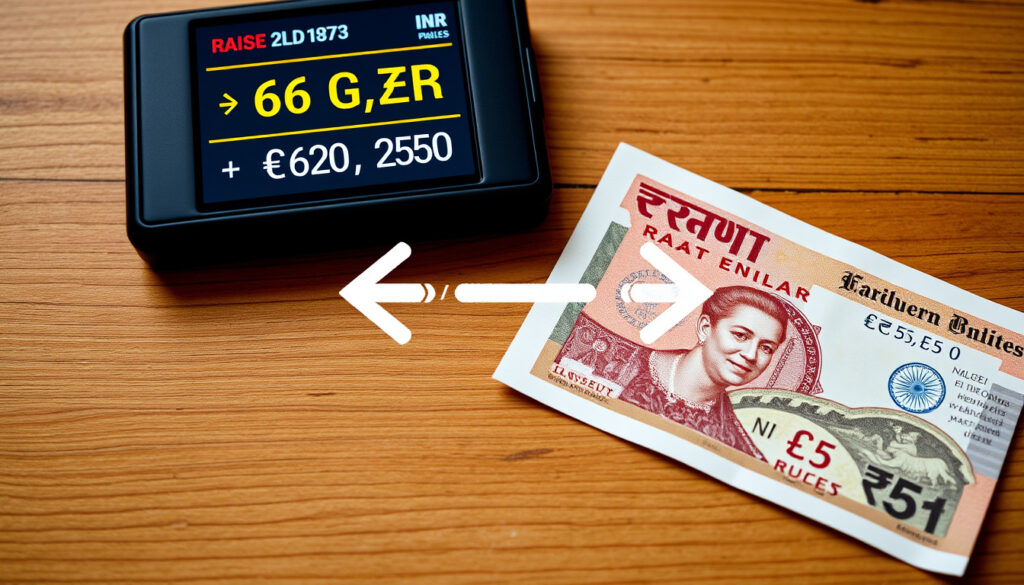
The British pound sterling, the official currency of the United Kingdom, is one of the most widely traded currencies in the world. For anyone looking to convert GBP to Indian rupees, whether for travel, remittances, or online transactions, the exchange rate fluctuates constantly. This article provides the latest rate snapshot, conversion tables for common amounts, and a practical guide to sending money between the UK and India.
The mid-market rate—the rate used by financial markets—currently stands at £1 = ₹129.87. However, the rate you receive from a bank or transfer service is rarely that number. Understanding the difference between the mid-market rate and the retail rate is essential for getting the best value.
UK Currency in India Today – Current GBP to INR Rate
- The mid-market rate for GBP to INR is around 130, but the rate you get from a bank or exchange service is usually lower due to markup.
- Money transfer apps like Wise and Revolut offer near-mid-market rates, while traditional banks and Western Union charge higher fees.
- The GBP/INR rate is volatile and influenced by UK economic data, RBI monetary policy, and global market sentiment.
- For large amounts (e.g., £1,000), even a small difference in rate can save you thousands of rupees.
- Provider-specific rates can differ by 2–4 rupees per pound, which adds up quickly on larger transfers.
| Attribute | Value |
|---|---|
| Currency code | GBP |
| Symbol | £ |
| Nickname | Sterling, Quid |
| Subunit | Pence (100 pence = 1 pound) |
| Current mid-market rate (1 GBP to INR) | ₹129.87 |
| Typical retail rate offered by banks | ₹126–₹129 (depending on bank) |
| Popular money transfer services | Wise, Remitly, Western Union, Xe, Revolut |
How Much is 100 Pounds in Indian Rupees? (And Other Common Amounts)
Conversion Table for 1, 100, 1000 GBP to INR
Using the current mid-market rate of ₹129.87 per pound, the following conversions apply. Actual amounts vary by provider.
- £1 = ₹129.87
- £10 = ₹1,298.70
- £100 = ₹12,987
- £1,000 = ₹1,29,870
At the promotional rate offered by some services (e.g., Remitly’s 131.50 for first transfers), £100 would yield ₹13,150, but that rate is often limited to a single transaction.
Real-World Example: Cost of a £100 Purchase in INR
A UK-based shopper buying Indian goods worth £100 will pay roughly ₹12,987 at the mid-market rate. However, if using a credit card that adds a 2.5% foreign exchange markup, the actual cost becomes about ₹13,312. Comparing rates before paying can make a real difference.
The rate shown on Google or a converter tool is the mid-market rate. Banks and transfer services apply a markup, often 1–3% above that rate. Always check the total cost including fees, not just the exchange rate.
What is the Official Name and Symbol of UK Currency?
Full Name: Pound Sterling
The official name of the UK currency is Pound Sterling. It is often abbreviated as “sterling” in financial contexts.
Symbol: £
The pound sign (£) derives from the letter “L” representing the Latin word libra, a unit of weight. It is used before the number, e.g., £50.
ISO Code: GBP
The three-letter currency code assigned by the International Organization for Standardization is GBP, standing for Great Britain Pound.
Why It’s Called ‘Sterling’
The term “sterling” dates back to the 11th century, referring to silver pennies of high purity. Over time, “pound sterling” became the standard name for the British currency, distinguishing it from other pounds (e.g., Egyptian pound).
How to Convert GBP to INR and Send Money Between the UK and India
Compare Money Transfer Services (Wise, Western Union, Remitly, Revolut)
Different providers offer very different deals. The table below summarises the key characteristics from publicly available information.
- Wise: Transparent mid-market rate, low fees (£0–£3 depending on amount), good for larger transfers.
- Western Union: Offers fast transfers but the rate shown is an estimate that includes a markup. Suitable for cash pickups in India.
- Remitly: Promotional first-transfer rate (e.g., 131.50 INR/GBP) but a £1.99 fee applies. Standard rates are less competitive.
- Revolut: App-based, offers mid-market rates up to certain limits, then adds a fee. Good for smaller amounts.
When sending £1,000, the difference between a rate of 125.5 and 129.5 amounts to over ₹4,000. Always calculate the exact INR that will arrive in the recipient’s account after all fees.
Step-by-Step: Sending Money from the UK to India
- Compare rates and fees using a comparison tool or manually checking provider websites.
- Choose a provider that offers a rate close to the mid-market and low fixed fees.
- Create an account (usually free) and provide the recipient’s Indian bank details.
- Select the transfer amount and payment method (bank transfer, debit/credit card).
- Review the final INR amount and confirm. Transfers can take minutes to 3 business days.
Step-by-Step: Sending Money from India to the UK
- Check RBI regulations – outbound remittances from India have certain limits (up to $250,000 per financial year under LRS).
- Use a provider that accepts INR and converts to GBP, such as Wise or ICICI Bank UK.
- Provide the UK recipient’s bank details and complete the transfer. Same-day options are available.
What to Know About Bank Transfer Fees and Exchange Rate Markups
Banks typically add a spread of 1–3% to the mid-market rate. On a £1,000 transfer, that hidden cost can be ₹1,300–₹3,900. Specialist money transfer services are often cheaper because they operate with slimmer margins.
Remitly’s 131.50 rate is only for first-time users and may be limited to £1,000 or less. After the promotion, the standard rate applies. Always read the terms before relying on a headline figure.
Historical Context of GBP to INR
The relationship between the British pound and the Indian rupee has shifted dramatically over the decades.
- : Post-independence, the rupee was pegged to the pound sterling.
- : Bretton Woods collapse: rupee no longer pegged to GBP.
- : India’s economic liberalization leads to floating exchange rate regime.
- : Global financial crisis causes sharp GBP depreciation against INR.
- : Brexit vote causes pound to drop to historic lows vs. INR (around ₹80).
- : Pound recovers to ₹100+ as UK raises interest rates.
- : GBP/INR fluctuates around ₹130 amid global inflation and RBI policy.
Certainty vs. Uncertainty: Understanding the Rate
| Established information | Information that remains unclear |
|---|---|
| The official name of UK currency is Pound Sterling – this is fixed. | The rate you actually receive from a bank or transfer service is unpredictable – it depends on their markup and fee structure. |
| The current mid-market rate is publicly available and updated every few seconds. | Future GBP/INR rates are impossible to predict with certainty; only forecasts exist. |
| Exchange rates are set by the forex market and can change any time. | Promotional rates (e.g., Remitly’s 131.50) are limited-time offers and may change. |
Analysis: Why the GBP/INR Rate Matters
For travelers, a stronger pound means visiting India becomes more expensive for UK tourists, while a weaker pound makes UK goods cheaper for Indian shoppers. For remittances, Indian workers in the UK sending money home benefit from a higher GBP/INR rate; the opposite for UK businesses paying Indian suppliers. For investors, currency fluctuations affect returns on UK assets held by Indian investors and vice versa. Market drivers include UK interest rates, India’s trade deficit, oil prices, and geopolitical events – see Reuters’ currency coverage for ongoing analysis.
Trusted Sources for GBP to INR Data
Several official and widely used sources provide reliable exchange rate information:
- Bank of England – Official UK central bank, publishes policy rates and economic data.
- Reserve Bank of India (RBI) – Official Indian central bank, reference rates for INR.
- XE.com – Widely used live currency converter with historical data.
- Wise – Provides mid-market rate and low-fee transfers.
- OANDA – Trusted forex data provider with historical rates.
- Investing.com – Live GBP/INR rates with charting tools.
What’s Next for GBP/INR?
Watch for UK inflation and interest rate decisions from the Bank of England. India’s GDP growth and RBI’s repo rate changes will affect rupee strength. Trade agreements between UK and India (post-Brexit) could influence the long-term rate. For real-time updates, set up a rate alert on a currency converter app. For more details on travel conversions, see our guide on How to Convert Currency for International Travel.
Frequently Asked Questions About UK Currency in India
What is the Euro to INR rate today?
The Euro to INR rate fluctuates similarly; as of today, 1 EUR ≈ 109.50 INR. Check a live converter for the latest.
What is the Canada currency rate in India today?
1 Canadian Dollar (CAD) is approximately 62.30 INR today. Exchange rates vary by service.
How does the Pakistani Rupee compare?
This topic focuses on UK currency in India. For PKR rates, visit a dedicated converter.
Is the UK currency called ‘British Pound’ or ‘Pound Sterling’?
Both are correct, but ‘Pound Sterling’ is the official name, while ‘British Pound’ is commonly used.
Why do I get a different rate on a money transfer app vs. Google?
Google often shows the mid-market rate, while apps add a markup. Always compare the total cost including fees.
What is the best way to convert GBP to INR?
Compare the final INR amount after fees. Services like Wise and Revolut offer near-mid-market rates, while Western Union and banks often add a markup.
How much is 1000 pounds in Indian rupees today?
At the current mid-market rate of 129.87, £1,000 equals ₹1,29,870. Your actual amount will be slightly lower or higher depending on the provider.
What affects the GBP to INR exchange rate?
Key factors include UK interest rates set by the Bank of England, RBI policy, India’s trade deficit, oil prices, and global market sentiment.
Is the mid-market rate same as the rate offered by banks?
No. Banks and transfer services add a markup to the mid-market rate. The difference is effectively a fee.
Are there limits on sending money from India to the UK?
Yes. Under the Liberalised Remittance Scheme (LRS), Indian residents can remit up to USD 250,000 per financial year for current account transactions.
More related posts
 Top 10 Netflix Series – Most Watched and Best of All Time
 Dax Shepard – Biography, Net Worth, and Podcast Career
 Denise Welch – Biography, Age, Husband & Son in 2025
 HMRC Self Assessment Login – Government Gateway Guide 2025
 Paramore Hayley Williams – Age, Marriage, and Band Status
 Eminem The Real Slim Shady Lyrics – Full Song Meaning & Clean Version
 When Should Tyre Pressure Be Checked – Always When Cold
 Colour Wow Dream Coat – Comparing Variants for Your Hair